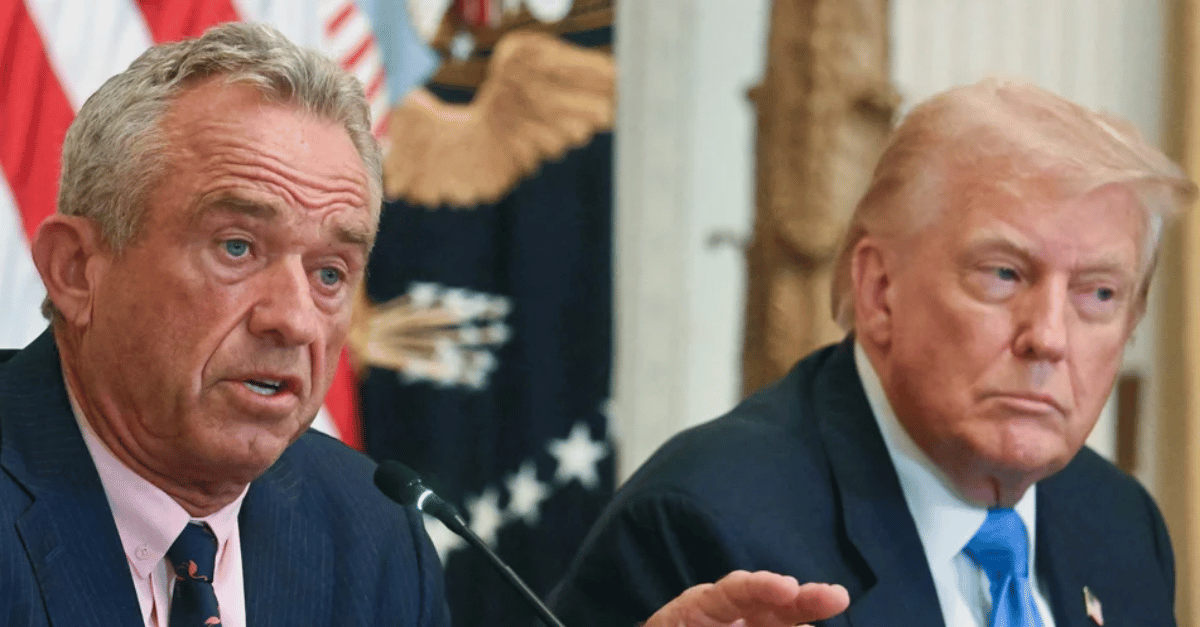
- Fifteen states filed suit Tuesday, 24 February, challenging the CDC’s removal of universal immunization recommendations for seven childhood diseases, including flu, hepatitis B, and COVID-19.
- The lawsuit also contests HHS Secretary Robert F. Kennedy Jr.’s replacement of all 17 ACIP members, arguing the process was unlawful and the resulting policy guidance unscientific.
A coalition of 15 Democratic-led states filed a federal lawsuit Tuesday against the U.S. Department of Health and Human Services and Health Secretary Robert F. Kennedy Jr., seeking to reverse the CDC’s January 2026 decision to eliminate universal immunization recommendations for seven childhood diseases—a move the states argue violates federal law and threatens public health.
The lawsuit, announced by California Attorney General Rob Bonta and Arizona Attorney General Kris Mayes, was filed in a Northern California federal court. It names the CDC and acting Director Dr. Jay Bhattacharya as additional defendants. Thirteen other state attorneys general and Pennsylvania Governor Josh Shapiro joined the action.
What the New Schedule Changes
Under guidance issued in January, the CDC stopped recommending universal childhood immunization against flu, rotavirus, hepatitis A, hepatitis B, meningococcal disease, RSV, and COVID-19. Protections for those diseases are now recommended only for children deemed high risk, or when physicians recommend them through what the administration calls “shared clinical decision-making”—a framework critics argue introduces ambiguity into previously standardized public health guidance.
The change reduced the number of diseases for which all children are routinely recommended to receive vaccines from 17 to 11. The Trump administration has cited alignment with other countries’ schedules, pointing to Denmark as a comparator—a rationale the lawsuit contests. “Copying Denmark’s vaccine schedule without copying Denmark’s health care system doesn’t give families more options—it just leaves kids unprotected from serious diseases,” Mayes said at a press conference.
ACIP Overhaul at the Center of the Legal Challenge
The lawsuit also challenges Kennedy’s decision last year to dismiss all 17 members of the CDC’s Advisory Committee on Immunization Practices, the expert panel that recommends which vaccines Americans should receive and when. The complaint alleges this replacement was unlawful. Kennedy appointed eight new members, several of whom have expressed public skepticism of vaccines, according to reporting from epidemiologist Dr. Katelyn Jetelina, who noted in a recent interview that the new committee’s deliberations included “more than 50 falsehoods around vaccines mentioned in two days.”
ACIP recommendations historically guide state school-entry immunization requirements and determine whether insurers are obligated to cover specific vaccines—making changes to committee composition and process operationally significant for payers, providers, and public health agencies alike.
Industry and Supply Chain Implications
The policy uncertainty compounds concerns already circulating across the vaccine manufacturing and procurement ecosystem. Industry analyst Anand Ekambaram, a 30-year veteran of vaccine development and manufacturing who served as Executive Director and Head of Manufacturing and Supply Chain at CEPI, has identified changing U.S. vaccine policy as one of three compounding disruptions currently reshaping global vaccine manufacturing.
“It’s the vaccine sector that has been very badly affected by policy changes because investors simply don’t want to take a risk on vaccines until they get clarity on policy,” Ekambaram noted in a recent PharmaSource podcast. He reported knowing of multiple companies with promising clinical data that have lost funding or been unable to secure investment as a result of regulatory and policy uncertainty. The immediate operational challenge for hospital systems, physicians, and insurers is that providers typically need to place vaccine orders months in advance of the fall season, and insurance coverage is contingent on ACIP recommendations.
Parallel Legal Actions
Tuesday’s filing escalates a broader legal battle. A separate lawsuit filed earlier this month by six major medical organizations—including the American Academy of Pediatrics and the American Public Health Association—is already before a federal court in Massachusetts, where a ruling is expected imminently. More than 100 public health experts and organizations have filed an amicus brief in support of that case.
HHS press secretary Emily G. Hilliard dismissed Tuesday’s multistate action as “a publicity stunt dressed up as a lawsuit.” The CDC and HHS did not respond to additional requests for comment.
California Governor Gavin Newsom described the administration’s revised schedule as “reckless” and “unscientific,” warning that eroding vaccine confidence would directly increase infectious disease burden and state-level costs, including Medicaid spending and public health communication expenses. Attorney General Bonta warned the changes would “drive up costs for states” alongside threatening children’s health outcomes.
What Pharma Professionals Should Watch
For pharmaceutical manufacturers, CDMOs, and procurement teams, the evolving legal and regulatory landscape around U.S. vaccine policy creates several near-term uncertainties worth monitoring: the Massachusetts court ruling on the AAP lawsuit, which could set a precedent for the multistate action; potential disruption to fall 2025 and 2026 vaccine contracting cycles; and continued investor hesitation in vaccine-specific R&D—particularly for pandemic-potential pathogens—until policy direction stabilizes.
 Sign up to the free weekly newsletter for all the latest news, resources and podcasts in pharma manufacturing.