- Nine pharmaceutical companies signed Most Favored Nation pricing agreements on December 19, committing to $150 billion in US manufacturing investments
- President Trump threatened tariffs on countries that don’t raise drug prices, warning European nations they’ll face the same consequences
Amgen, Bristol Myers Squibb, Boehringer Ingelheim, Genentech, Gilead Sciences, GlaxoSmithKline, Merck, Novartis, and Sanofi signed Most Favored Nation pricing agreements with the Trump administration on December 19, marking what a senior White House official described as a shift from “initial industry hesitance collapsing into cooperation.”
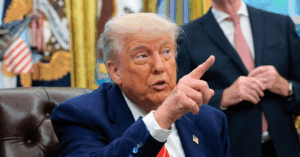
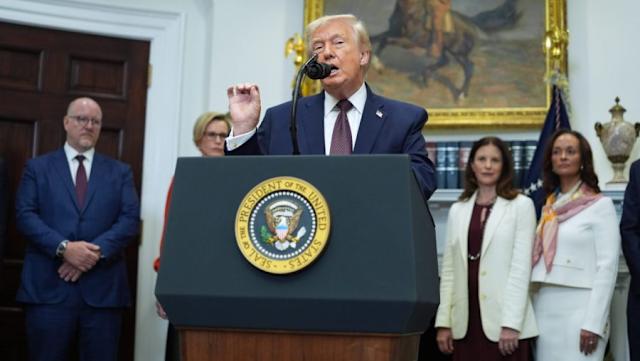
President Trump gathered the CEOs in the Oval Office to announce the deals, which he called “the greatest victory for patient affordability in the history of American health care.”
Key Terms
Under the agreements, all nine companies committed to:
- Provide MFN drug prices to every state Medicaid program
- Guarantee MFN pricing on all future innovative medicines
- Repatriate increased foreign revenue from existing products resulting from “America First” trade policies
- Offer deep discounts off list prices through the direct-to-consumer TrumpRx platform
- Collectively invest at least $150 billion in US manufacturing
In exchange, companies receive a three-year reprieve from pharmaceutical tariffs, contingent on separate agreements with the Department of Commerce requiring them to onshore an equivalent value of drugs they currently import.
Several companies will also donate active pharmaceutical ingredients to the Strategic Active Pharmaceutical Ingredients Reserve (SAPIR). GSK committed 98.8kg of albuterol, Bristol Myers Squibb pledged 6.5 tons of apixaban (Eliquis), and Merck will contribute 3.5 tons of ertapenem.
Price Reductions Through TrumpRx
Examples of pricing through the direct-to-consumer platform include:
- Amgen’s Repatha: $573 to $239
- Amgen’s Aimovig (migraine): 60% discount from list price
- Amgen’s Amjevita (Humira biosimilar): 80% discount from list price
- Bristol Myers Squibb’s Reyataz (HIV): $1,449 to $217
- Boehringer Ingelheim’s Jentadeuto (diabetes): $525 to $55 (90% discount)
- Genentech’s Xofluza (flu): $168 to $50 (70% discount)
- Gilead’s Epclusa (Hepatitis C): $24,920 to $2,425 (90% discount)
- GSK’s Advair Diskus 500/50: $265 to $89 (up to 66% savings across respiratory portfolio)
- Merck’s Januvia, Janumet, Janumet XR (diabetes): “affordable prices” through direct-to-patient program
- Novartis’s Mayzent (multiple sclerosis): $9,987 to $1,137 (89% discount)
- Novartis’s Rydapt and Tabrecta (cancer): available on TrumpRx
- Sanofi’s Plavix: $756 to $16
- Sanofi portfolio (diabetes, cardiovascular, neurological, cancer): average 61% reduction
Bristol Myers Squibb will provide Eliquis to Medicaid for free. Injectable and infusion products will not be available on TrumpRx, as officials said it would not be “clinically appropriate” without clinical provider involvement.
FDA Priority Vouchers
The White House is recommending certain companies’ drugs for Commissioner’s National Priority Vouchers, which could accelerate FDA review by up to 10 months. Merck has already received vouchers for enlicitide, an oral PCSK9 drug for lowering LDL cholesterol, and sacituzumab tirumotecan, a TROP2-directed antibody-drug conjugate for cancer treatment.
A senior administration official confirmed that companies are not guaranteed vouchers as part of MFN deals, and the FDA is not required to grant them.
The GENEROUS Model
In November, the Centers for Medicare & Medicaid Services unveiled the GENEROUS model, a voluntary initiative implementing MFN pricing in participating state Medicaid programs for outpatient drugs. The benchmark is calculated as the second-lowest country-specific manufacturer-reported net price, adjusted by GDP per capita using a purchasing power parity method.
The country basket for price comparisons includes the UK, France, Germany, Italy, Canada, Japan, Denmark, and Switzerland. The model launches in January 2026 and runs through December 2030.
Novartis said it will apply to participate in the GENEROUS model and will launch future medicines at prices comparable to those from other high-income countries.
A senior administration official predicted major Medicaid price reductions, noting that many current Medicaid prices for drugs from companies in the deals are significantly higher than what comparable countries pay. They estimated 30-40% of Medicaid drugs would be affected.
International Pressure
Trump revealed his strategy for pressuring foreign governments to accept higher drug prices:
“We told them, if you don’t do it, we’re going to have to use tariffs and we’re going to charge you a 10% tariff, which is far more money than the money we’re talking about. And they immediately agreed to do it.”
He noted that the United Kingdom’s National Health Service (NHS) “agreed to pay the fair share for prescription drugs for the first time in 26 years,” adding: “We expect other countries in Europe will do the same—and if they don’t, we’re going to put tariffs on them.”
On December 1, the Office of the US Trade Representative, Department of Commerce, and HHS announced an agreement with the UK to increase net prices of new prescription drugs by 25%.
Manufacturing and National Security
Trump framed the manufacturing commitments as a national security priority: “I want to thank these companies and their incredible executives for their generous contribution to American national security, because it’s really what it is.”
He predicted the US would produce “close to 100% of our pharmaceuticals in a very short period of time.”
Health Secretary Robert F. Kennedy Jr. said:
“By the end of this term, 95% of the drugs will have MFN. In other words, Americans will be paying the lowest price in the world.”
Outstanding Agreements
Of the 17 companies that received letters from Trump in July, 14 have now signed MFN deals. AbbVie, Johnson & Johnson, and Regeneron have yet to announce agreements, though Trump said at least three companies will sign next week.
J&J CEO Joaquin Duato said in October that the company has been talking with the Trump administration “since day 1, even before day 1” and is looking to find “common ground” on shared priorities.
Previous agreements include Pfizer, AstraZeneca, Eli Lilly, and Novo Nordisk. The Eli Lilly and Novo Nordisk deals included commitments of $27 billion and $10 billion respectively in US manufacturing investments, with dramatic price reductions on GLP-1 medications.
Next Targets
Trump concluded the announcement by signaling his next focus: “I’m going to call in the insurance companies that are making so much money. And they have to make less. A lot less.”
He said the meeting with top health insurers may take place in Florida or the White House in the first week of January. Stocks of national health insurers—including UnitedHealth Group, CVS Health, Humana, Cigna, and Elevance Health—dropped on the comments.
The actual impact of the agreements remains unclear, as most details have been kept confidential. However, some analysts note that Medicaid already guarantees the lowest price offered to any commercial payer, which could limit the practical effect of MFN pricing in that program.
 Sign up to the free weekly newsletter for all the latest news, resources and podcasts in pharma manufacturing.