India makes generics for the world, but most of its biologics are imported. Biopharma SHAKTI, a ₹10,000 crore program announced in the 2026–27 budget, and the BioE3 biomanufacturing policy aim to change that by funding talent, trial sites, regulators and contract manufacturers. SHAKTI’s money has not started flowing yet. Delhi says it will in January 2027, just as US sponsors look for alternatives to Chinese CDMOs.
India Biopharma SHAKTI and BioE3: latest updates
- Nov 20, 2026: The Department of Pharmaceuticals said it plans to start implementing Biopharma SHAKTI in January 2027, once the Union Cabinet approves the framework.
- Aug 21, 2026: Former NITI Aayog chief Amitabh Kant warned that the drug regulator has not built capacity at the pace of India’s ambitions.
- Jul 2026: NITI Aayog published a roadmap for building India’s bioeconomy by 2035, built around BioE3.
- Jun 11, 2026: Jefferies estimated that Indian CRDMOs could gain $700 million from the China+1 shift, naming Divi’s, Laurus and Sai Life Sciences as key beneficiaries.
India Biopharma SHAKTI and BioE3 at a glance
| Region | India |
| Instruments | Biopharma SHAKTI (Strategy for Healthcare Advancement through Knowledge, Technology and Innovation), announced in the Union Budget 2026–27; BioE3 (Biotechnology for Economy, Environment and Employment) policy, approved in August 2024 |
| Size | ₹10,000 crore (about $1.1 billion) over five years, FY2026–27 to FY2030–31 |
| Legal status | BioE3 in force; SHAKTI awaiting Cabinet approval of its framework |
| Key dates | SHAKTI rollout targeted for January 2027 |
| Most exposed | Indian CRDMOs and biosimilar makers, and sponsors looking for China+1 capacity |
| Official source | Press Information Bureau |
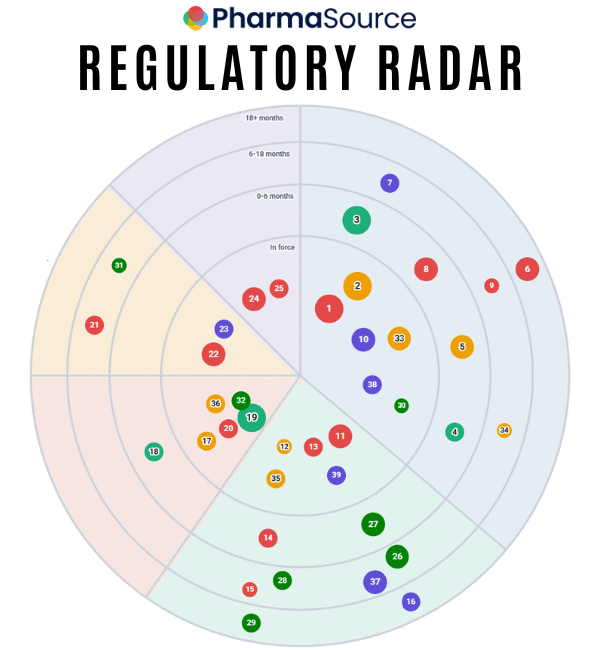
| PharmaSource Score | 168 (rank 20) Impact 7, Reach 4, Likelihood 6 Download the PharmaSource Regulatory Radar |
What India’s Biopharma SHAKTI and BioE3 are
India’s pharma industry grew on cheap, high-volume small molecules. Biologics, the medicines made in living cells for cancer, diabetes and autoimmune disease, remain a smaller and more import-dependent part of it. Finance Minister Nirmala Sitharaman announced SHAKTI on February 1, 2026 to shift India from volume to value. With BioE3, it uses five levers:
- Talent: Three new National Institutes of Pharmaceutical Education and Research (NIPERs) and upgrades to seven existing ones for biopharma research, manufacturing and regulation.
- Clinical trials: A network of more than 1,000 accredited clinical trial sites.
- Regulation: A dedicated scientific review cadre inside the Central Drugs Standard Control Organisation (CDSCO).
- Manufacturing: Support for CRDMOs making biopharmaceuticals, with the first cycle focused on diabetes, cancer and autoimmune disorders.
- Biomanufacturing hubs: Under BioE3, the government launched 21 biomanufacturing hubs in September 2025 for pilot and pre-commercial scale-up, alongside biofoundries and Bio-AI hubs.
Where India’s Biopharma SHAKTI and BioE3 stand
- Aug 2024: The Union Cabinet approved BioE3.
- Sep 1, 2025: The first BioE3 biomanufacturing hubs opened.
- Feb 1, 2026: SHAKTI announced in the Union Budget 2026–27.
- Mar 2026: Operational guidelines, the application portal and calls for proposals had not been notified.
- Jul 2026: The Pharmaceuticals Secretary said the guidelines were in their final stages and awaited Cabinet clearance.
- Jan 2027: Targeted start of implementation.
What India’s Biopharma SHAKTI and BioE3 mean for manufacturing and outsourcing
SHAKTI aims squarely at contract manufacturers. Satyaprakash T L, Joint Secretary at the Department of Pharmaceuticals, said “The scheme is designed to support CRDMOs to manufacture biopharmaceuticals.” It arrives as sponsors rethink China:
- Sponsors seeking China+1 capacity: Syngene, Aragen, Piramal and Sai Life Sciences all report more requests from Western pharma. Sai Life has almost doubled capacity since 2019 and is adding another 25%.
- Biologics programs: India’s strength is still small molecules and peptides. Industry leaders admit the sector still faces challenges in advanced capabilities like biologics, so SHAKTI funding matters most for mAb, biosimilar and ADC capacity.
- Indian CRDMOs: Grants and trial-site funding lower the cost of moving into biologics. Some firms are also buying US sites: Syngene’s Baltimore purchase from Emergent added about 35KL of biologics capacity.
- Sponsors running trials: 1,000 accredited sites and a stronger CDSCO could make India a faster place to run biologics trials, which pulls clinical supply work with it.
- Raw materials: Indian plants still lean on China upstream. Piramal buys about 15% of its raw materials from China, so China+1 in India is not yet China-free.
For outsourcing leaders, the practical step is to audit Indian partners’ biologics readiness now: capacity, regulatory track record with the FDA and EMA, and upstream China exposure. That way you can move programs when SHAKTI-funded capacity comes online.
Why supporters back India’s Biopharma SHAKTI and BioE3
“The Union Budget makes a decisive investment in India’s health and innovation future.”
Kiran Mazumdar-Shaw, executive chairperson, Biocon (Devdiscourse)
- Import substitution: Domestic biosimilars cut India’s import bill and make advanced therapies cheaper at home.
- Timing: BIOSECURE and the US-China trade dispute have pushed Western sponsors to look for capacity outside China, and India is the largest alternative.
- Regulatory credibility: A permanent review cadre answers a long-standing complaint that CDSCO relies on external expert committees.
- Talent pipeline: New and upgraded NIPERs target the shortage of industry-ready biologics scientists.
- Shared infrastructure: BioE3 hubs give startups and smaller firms pilot-scale capacity they could not build alone, which feeds later demand for CDMO scale-up.
Criticisms of India’s Biopharma SHAKTI and BioE3
“The regulator must cease to be a constraint on India’s ambition.”
Amitabh Kant, chairperson, Fairfax Centre for Free Enterprise, former CEO of NITI Aayog (Business Standard)
- Regulatory capacity: Kant notes that 201 drug inspectors were in post at the end of 2023, against a sanctioned 504, overseeing more than 10,500 manufacturing units.
- Too small: ₹2,000 crore a year is modest next to China’s state backing for biopharma. Mazumdar-Shaw herself has warned that China and South Korea are scaling biosimilars with strong state backing.
- Slow start: Ten months after the budget, the guidelines are still unpublished, and grant payouts under earlier schemes lagged approvals by three to six months.
- Incumbents first: Startup founders worry the benefits will flow to established biologics manufacturers and CMOs, which would build scale without accelerating innovation.
What’s next for India’s Biopharma SHAKTI and BioE3
- Cabinet approval: The Department of Pharmaceuticals is finalizing SHAKTI’s framework for the Union Cabinet.
- Jan 2027: Targeted start of implementation and the first funding cycle.
- Guidelines: Watch for the eligibility rules for CRDMOs and how much of the ₹10,000 crore goes to manufacturing.
- BIOSECURE list: The US list of biotechnology companies of concern, due December 18, will show how much work could move to India.
- Our score: SHAKTI and BioE3 score 168 (rank 20). Impact is 7 because they build the largest alternative to Chinese capacity. Reach is 4 because they mainly touch Indian CDMOs and their customers. Likelihood is 6 because the money is budgeted but not yet flowing.