Saudi Arabia is using its single public purchaser to build a domestic drug industry. NUPCO’s tenders, the local content authority’s mandatory lists and price preferences, and a faster SFDA pathway for biosimilars all reward companies that make medicines in the Kingdom. Local insulin and vaccine plants are due in 2027, and import-only suppliers are losing ground in public tenders.
Saudi Arabia pharma localization: latest updates
- Oct 26, 2026: Direct investment in Saudi drug manufacturing has passed SAR 13 billion, and local production covers about 26% of the market, said Abdulrahman Al-Rahimi, who chairs the pharmaceutical industry committee at the Federation of Saudi Chambers.
- Sep 15, 2026: Sudair Pharma said its SAR 280 million insulin plant will begin production in 2027, covering every manufacturing stage in the Kingdom and holding three years of API stock.
- Jul 13, 2026: Saudi Arabia plans to make 11 essential vaccines locally, covering about 70% of national demand by the fourth quarter of 2027.
- Jul 10, 2026: The SFDA’s first General Guideline on Biosimilars took effect, allowing case-by-case waivers of comparative efficacy trials and treating approved biosimilars as interchangeable.
Saudi Arabia pharma localization at a glance
| Region | Saudi Arabia (Gulf Cooperation Council) |
| Instrument | LCGPA local content regulations and National Product Mandatory List; NUPCO tenders and offtake agreements; SFDA biosimilars guideline; National Biotechnology Strategy |
| Legal status | In force. Procurement preferences apply; the biosimilars guideline applies from July 10, 2026 |
| Key dates | Mar 1, 2026: expanded mandatory list. Jul 10, 2026: biosimilars guideline. 2027: local insulin and vaccine production |
| Most exposed | Exporters of generics and biologics into Saudi public tenders; sponsors weighing tech transfer to Saudi partners; CDMOs serving the Gulf |
| Official source | National Biotechnology Strategy (Vision 2030) |
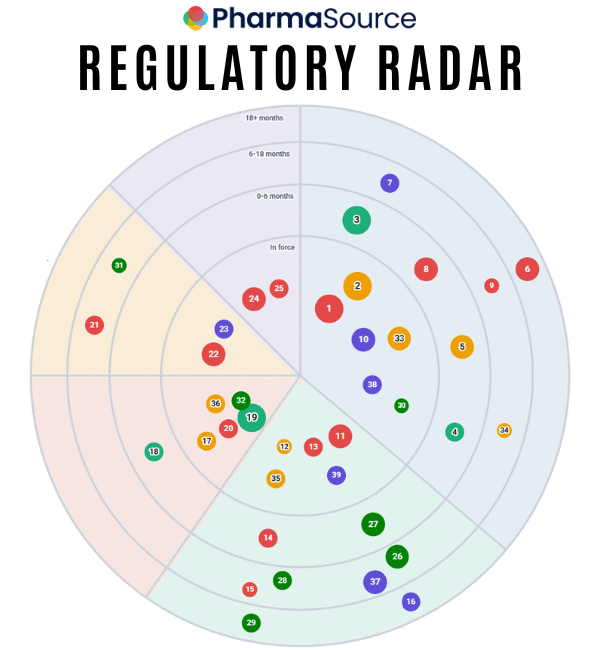
| PharmaSource Score | 96 Impact 4, Reach 3, Likelihood 8 Download the PharmaSource Regulatory Radar |
What Saudi Arabia pharma localization is
Saudi Arabia has no single localization law for medicines. Three institutions pull in the same direction: the Local Content and Government Procurement Authority (LCGPA) writes the procurement preferences, the National Unified Procurement Company (NUPCO) buys for the public health system, and the Saudi Food and Drug Authority (SFDA) approves products and sites. NUPCO procures more than SAR 25 billion a year for over 400 public facilities, so its rules shape the market.
- Mandatory list: Products on the LCGPA’s National Product Mandatory List must be sourced locally in public procurement. The list was expanded from March 1, 2026, including pharmaceuticals and medical supplies.
- Price preference: A local product within 10% of the lowest price is treated as the lowest bid. Further preferences and a local content weighting apply in larger contracts.
- Offtake agreements: NUPCO signs long-term purchase commitments with local plants run with multinational partners. Sanofi is transferring insulin technology to Sudair Pharma for full production in the Kingdom, and Novo Nordisk’s deal with PIF-owned Lifera aims to cover more than half of Saudi insulin needs.
- Regulatory pathway: The biosimilars guideline accepts reference products approved by the SFDA or a stringent regulator and supports local biosimilar manufacturing, though local products must still meet the SFDA’s technology transfer requirements.
- Strategic targets: The National Biotechnology Strategy targets localization through biomanufacturing of vaccines and biosimilars, and aims to make the Kingdom the leading MENA biotech hub by 2030.
Where Saudi Arabia pharma localization stands
Saudi plants still make mostly generics, such as antibiotics, pain relievers and treatments for hypertension and diabetes, and the Kingdom relies on imported APIs. The SAR 36 billion market is moving toward biologics, with work under way to localize biosimilars, pediatric vaccines and insulin. Advisers to exporters report that NUPCO’s 2026 tenders favor SFDA-registered products made in the Kingdom, sharply narrowing tender access for imported routine generics where a local version exists.
- Jan 2024: National Biotechnology Strategy launched.
- Oct 2024: NUPCO, Novo Nordisk and Sanofi sign insulin localization deals worth SAR 4 billion.
- Oct 27, 2025: The LCGPA signs a localization and knowledge transfer agreement with Sudair Pharma.
- Mar 1, 2026: Expanded mandatory list takes effect.
- Jul 10, 2026: SFDA biosimilars guideline applies.
- 2027: Sudair insulin production starts; 11 local vaccines targeted by the fourth quarter.
What Saudi Arabia pharma localization means for manufacturing and outsourcing
The Kingdom is trading market access for capacity. Sponsors that bring technology, jobs and local production win long-term public demand; those that only export face a shrinking share of tenders.
- Sponsors with branded portfolios: Innovative products without a local alternative still reach NUPCO, but large tenders carry offset demands. Expect tech transfer or local fill-finish to become part of the price of access for high-volume biologics.
- Generics exporters: Routine generics with established Saudi production face the sharpest loss of tender access. Distributors are forming contract packaging and toll manufacturing ventures so their principals qualify for local preference.
- Biosimilar developers: The new guideline lowers clinical costs and gives automatic interchangeability, which pairs with local production to make Saudi Arabia an attractive launch market for Gulf supply.
- CDMOs: Saudi partners need process know-how, fill-finish capacity and API supply. WuXi AppTec has signed two MoUs to expand its CRDMO capabilities into the Kingdom.
- API suppliers: Local plants still import most raw materials, and Al-Rahimi called that dependence the industry’s greatest challenge. Industry is pressing for preferences for products made with Saudi-sourced inputs.
For outsourcing leaders, the practical step is to map which of your Saudi tender products already have, or will soon have, a locally made competitor, then decide product by product whether to license, tech-transfer, toll-manufacture or exit public tenders.
Why supporters back Saudi Arabia pharma localization
“Increasing the number of items on the mandatory list is a key objective.”
Ashraf Al Grain, Pharma Director, Local Content and Government Procurement Authority, PharmaBoardroom
- Supply security: NUPCO’s supply chain chief, Fahd Al-Bat’hi, argues that local makers respond faster to demand, and NUPCO is deploying AI at its command center to predict shortages.
- Price competitiveness: The LCGPA says many mandatory-list products are already priced at or below imported alternatives.
- Exports and jobs: Saudi drug exports topped SAR 1.5 billion in 2025, reaching more than 35 countries, and the biotech strategy targets 11,000 quality jobs by 2030.
- Resilience in biologics: Local insulin and vaccine capacity, backed by stockpiled API, protects patients from disruptions such as those seen during COVID-19.
Criticisms of Saudi Arabia pharma localization
“Government procurement discriminates against foreign manufacturers and requires onerous offsets.”
PhRMA, 2026 Special 301 submission
- Offsets in large tenders: PhRMA cites a 35% local investment requirement for large tenders, a regional headquarters requirement and lists of medicines reserved for local suppliers.
- IP and data protection: PhRMA says the SFDA has approved generic copies during patent or data protection periods since 2017, and NUPCO has bought them. It has asked USTR to put Saudi Arabia on its Watch List.
- Pricing pressure: External reference pricing takes the lowest price from a basket of countries, which PhRMA says undervalues innovative medicines.
- Thin API base: National API capacity remains limited, so plants that fill and pack imported API add jobs but only partial supply security.
What’s next for Saudi Arabia pharma localization
- Insulin in 2027: Watch whether Sudair’s plant starts on schedule and how fast NUPCO shifts insulin volumes to local supply.
- Vaccines by Q4 2027: The 11-vaccine plan would make vaccines the next category where imports lose public demand.
- Manufacturer data access: From 2027, NUPCO plans to let manufacturers see inventory and consumption levels so they can match production to demand.
- Mandatory list updates: Each LCGPA expansion moves more products into local-only procurement.
- Our score: Impact 4, because localization goals favor in-Kingdom production for key generics and biologics. Reach 3, because the effect concentrates on sponsors selling into Saudi public supply. Likelihood 7, because the preferences and the guideline are in force while some localization targets remain plans. That gives a PharmaSource Score of 96.
Related articles
- Egypt Pharma Localization: Import Bans, API Targets and a Fast Track for Export Plants
- Brazil’s Productive Development Partnerships Explained: Guaranteed Public Demand for Technology Transfer
- WuXi AppTec Signs Two MoUs to Expand CRDMO Capabilities into Saudi Arabia
- Shilpa Biologicals to Develop and Manufacture PD-1 Biosimilars for MENA
- Gavi African Vaccine Manufacturing Accelerator (AVMA): How Africa Pays for Vaccine Tech Transfer