In pharmaceutical manufacturing, the complexity of outsourcing relationships demands a systematic approach. As external manufacturing networks grow more critical to business success, organizations need a clear framework to guide their supplier management programmes. Each year, State of Flux’s Global SRM Research Report reveals that the organizations achieving the best results share a common foundation.
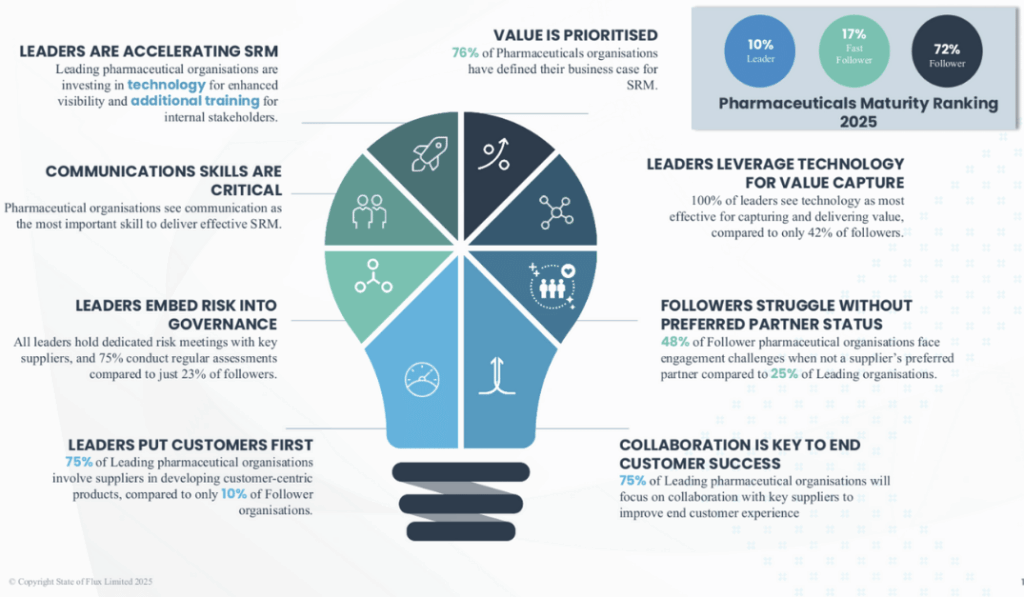
The pharmaceutical sector shows interesting patterns of relationship maturity. According to State of Flux’s research, 10% of pharmaceutical organizations are leaders with established, advanced supplier management programmes—higher than the 6% average across all sectors. However, 72% remain followers with limited ambition or are just starting their supplier management journey, whilst 17% are fast followers developing strong capabilities.
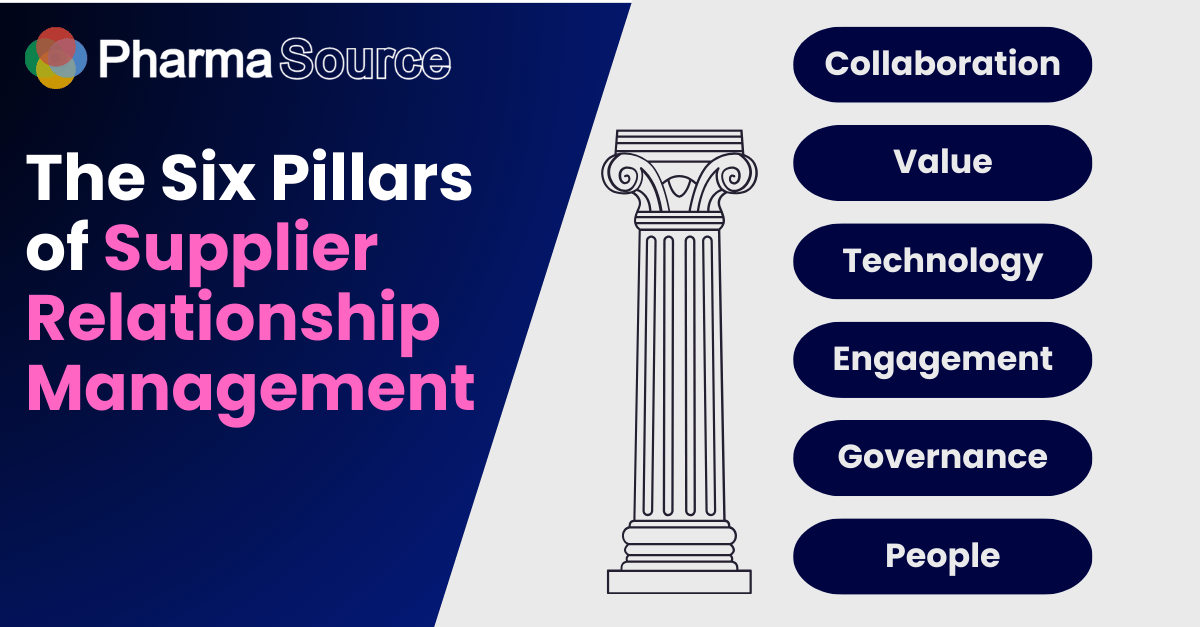
The Six Pillars of SRM, developed by State of Flux, is a best-practice framework that defines the essential components of an effective supplier management programme. These pillars, Value, Engagement, Governance, People, Technology, and Collaboration, provide a consistent foundation for success. Regardless of whether the objective is to drive greater value, strengthen governance and oversight, enhance performance, or build supply chain resilience, the Six Pillars remain universally relevant and central to achieving strong supplier relationships.
Collaboration
Collaboration stems from a combination of the right processes and the right behaviors. It’s the foundation that allows supplier management to deliver not just contractual obligations and expected value, but also unlock potential beyond existing contracts.
This pillar focuses on value release initiatives and building open, transparent relationships. It connects closely to the Value pillar, showing what the collaboration should focus on, and to the People pillar, which identifies and develops the skills and behaviors needed to make collaboration successful.
In pharmaceutical organizations, collaboration drives real competitive advantage. Leading organizations put customers first, 75% involve suppliers in developing customer-centric products, compared to only 10% of followers. Three-quarters of leaders also focus specifically on collaborating with key suppliers to improve the end customer experience.
Value
Understanding what value means for your business is critical. Your value proposition or business case must align with your organization’s strategic objectives and the challenges you face.
Value needs to be defined broadly, extending beyond cost to include improved performance, reduced risk, supply chain resilience, and innovation. This pillar links strongly to Engagement, helping create buy-in and support, and to Governance, where you establish tracking and reporting of value.
Most pharmaceutical organizations recognize this importance. 76% have defined their business case for SRM, establishing a clear foundation for their supplier management efforts.
Technology
Harnessing technology makes supplier management consistent and sustainable. Technology enables you to optimize processes and practices, manage information effectively, and automate reporting.
This frees supply chain professionals to spend more time engaging suppliers and the business to drive value from relationships. The Technology pillar supports Governance as a key enabler for many defined processes, and enables Collaboration by creating a shared workspace with suppliers and internal stakeholders.
Leading pharmaceutical organizations are investing heavily in technology for enhanced visibility and recognizing its strategic importance. Every leader surveyed sees technology as the most effective tool for capturing and delivering value, compared to only 42% of followers.
Engagement
Strong, active support from three key stakeholder groups is vital for success. First, executives and senior managers provide direction, role-model behaviors, and access to resources and budgets. Second, operational and wider business stakeholders regularly interact with strategic suppliers. Third, the suppliers themselves.
This pillar relies heavily on Value as the foundation for establishing engagement and support. Without clear value, it’s difficult to build the coalition you need.
The data shows that engagement quality matters significantly. When pharmaceutical organizations aren’t a supplier’s preferred partner, 48% of followers face engagement challenges compared to only 25% of leaders, demonstrating that successful organizations build stronger, more resilient relationships.
Governance
The activities under Governance are the foundation for effective supplier management programs. This includes processes for supplier segmentation, alignment of treatment strategies, contract management, performance and risk management, relationship development, and value tracking.
Governance also establishes meeting structures and roles and responsibilities for supplier management. It links strongly to Value, enabling value tracking and reporting, and to People, where it informs role profile development.
Pharmaceutical organizations classed as SRM leaders embed risk management directly into their governance structures. All leaders hold dedicated risk meetings with key suppliers, and 75% conduct regular risk assessments, compared to just 23% of followers.
People
Having the right skills and competencies within your supplier management team is crucial. This pillar provides a framework for people development that includes defining roles, identifying required skills and competencies, and assessing them.
It also covers providing training and positioning supplier management goals in personal development plans. This pillar draws on Governance for activities to incorporate into role profiles, and on Collaboration for the behaviors necessary to work effectively with suppliers and internal stakeholders.
For pharmaceutical organizations, communication stands out as the most important skill for delivering effective SRM. Leading organizations invest in additional training for internal stakeholders to build these critical capabilities.
State of Flux will be hosting a strategic partnership workshop at CDMO Live Europe. Download the agenda here.