
“Managing a radiopharmaceutical supply chain is like transporting a block of ice in the middle of summer under the scorching sun in the desert—you have no means to protect it or cover it, so it just continues melting.”
Daniel Rossetto, Head & SVP of Supply Chain and External Manufacturing at ARTBIO, brings over 17 years of experience leading high-speed, agile supply networks across biotech and pharma, including senior roles at Novartis.
In the latest PharmaSource podcast episode, Daniel explains why radiopharmaceutical supply chains require fundamentally different approaches than traditional pharma—and how companies are building resilience into networks where every minute counts and safety stock doesn’t exist.
Why Big Pharma Is Racing Into Radiopharmaceuticals
The radiopharmaceutical market is experiencing unprecedented consolidation as major players like Novartis, AstraZeneca, Bristol Myers Squibb, and Eli Lilly pour resources into the sector through strategic acquisitions.
“The use of radioisotopes is not actually that new. This modality has been used for a long time for diagnostic purposes,” Daniel explains. “But the real boom of interest has come only in recent years as more results from clinical studies at larger scale have shown what great results it can yield for therapeutic purposes.”
The strategic appeal extends beyond clinical efficacy. Many acquisitions target not just pipeline assets but the specialized infrastructure and knowledge required to manufacture and distribute these time-sensitive products.
“Part of the acquisitions were most probably to get a head start, not only on products, but actually on the infrastructure and knowledge,” Daniel notes. “The possibilities are many, thanks to the combination of different molecules and radioactive isotopes, which are opening up the potential to possibly treat a variety of diseases in the years to come.”
The sector’s momentum continues with AKTIS Oncology completing its IPO in January 2026 – the first radiopharmaceutical company to go public in months, signaling sustained investor confidence in the space.
The Radiopharmaceutical Supply Chain: A Race Against Radioactive Decay
Unlike traditional pharmaceuticals where inventory management provides crucial buffers, radiopharmaceuticals face an immutable constraint: natural radioactive decay.
“What makes radiopharmaceuticals special is that one of the main components is actually a radioactive isotope,” Daniel explains. “Many isotopes have a half-life of just hours or a few days. What this means is the activity, or in other words, the potency of the isotope, halves every few hours or days.”
The implications are severe. Products are made to order for specific patients, with shelf lives measured in hours rather than months. The moment the isotope is created in a nuclear reactor, an irreversible countdown begins.
“Every minute literally counts to make sure the dose is made and received at the right time for it to be both effective and safe for patients,” Daniel says. “It’s always almost impossible to maintain a stock as it just melts away without being able to stop it.”
This reality transforms supply chain management from an optimization exercise into a precision orchestration challenge across 15-20 different partners—from nuclear reactors to specialized logistics providers to hospital administration teams.
Building Resilience Without Safety Stock
The absence of traditional inventory buffers forces radiopharmaceutical companies to rethink fundamental supply chain strategies.
“One of the aspects that we look at is where you can actually decouple what can and cannot be stockpiled,” Daniel explains. “Some radioisotopes do have a starting material which is stable, which does not decay. Those materials need to be irradiated or processed in a reactor. From that moment onwards is where everyone involved is making sure that nothing happens that could stop it.”
The solution involves strategic overcapacity rather than inventory. Companies maintain relationships with multiple nuclear reactors globally and build flexibility into manufacturing networks to absorb unexpected disruptions.
“We often call it Murphy’s Law—something does go wrong quite often,” Daniel acknowledges. “It has happened that reactors have had extended downtime which was unexpected, which could cause a shortage in actual medical isotopes. One of the key ways to be ready is to have alternatives and backups ready all the time so it can be switched very quickly.”
CDMO Selection in Radiopharmaceuticals: Specialized Capabilities and the Right Mindset
Partner selection in radiopharmaceutical manufacturing requires capabilities that extend far beyond traditional CDMO criteria.
“It’s very often specialized CDMOs that have capabilities and infrastructure—whether it’s licenses, manufacturing and laboratory equipment, storage areas for radioactive waste,” Daniel explains. “Having the right partner that understands and has the right capabilities across each step is very important.”
Beyond infrastructure, partners must embrace the operational tempo that radioactive decay demands.
“It’s about every part of the chain. It’s the suppliers of materials which are usually made specifically for radiopharmaceuticals, the manufacturer, but also the logistic companies that understand the speed at which we need to move from A to B,” Daniel notes.
Communication patterns reflect this urgency. Rather than centralized coordination, successful radiopharmaceutical networks enable horizontal communication among partners who know each other well and can react without hierarchical delays.
Regulatory Adaptation and Technological Innovation
The time constraints of radiopharmaceuticals have forced both regulatory adaptation and technological innovation.
“There are some specific regulations that apply for radiopharmaceuticals, albeit still a pharmaceutical, so it definitely has to be produced following the same type of regulations,” Daniel says. “But there are ways and methods to test and release products as quickly as possible.”
Automation is accelerating across multiple dimensions—from handling materials during production to quality control testing to logistics management.
“More innovation is coming through, including automation, whether it’s in how material is handled, QC testing, but also on the logistics side, to really try and reduce any impact of delays,” Daniel explains.
New manufacturing technologies are also emerging. Companies are exploring cyclotrons, linear accelerators, and small, portable generators as alternatives to traditional nuclear reactors. Generators offer particular scaling advantages as they’re much easier to deploy than cyclotrons and linear accelerators, while still providing accessibility and production flexibility.
Supply Chain as Strategic Function in Radiopharmaceuticals
The unforgiving nature of radioactive decay elevates supply chain to a strategic priority in ways that traditional pharma rarely experiences.
“If something happens, then the impact is immediate,” Daniel says. “There are no buffers in between. So anything that happens definitely has a direct impact and gets seen straight away.”
This visibility drives intense focus on right-first-time manufacturing and on-time delivery metrics.
“Every dose that’s made is for a patient, and it’s shipped directly to the hospital where the patient is being treated,” Daniel explains. “On-time delivery becomes extremely important because even just a few hours could make the difference between being able to use that dose or not.”
The strategic importance manifests in organizational structure as well. Supply chain leaders maintain direct connections across the entire value chain—from starting materials through clinical operations to commercial teams—without the functional silos common in traditional pharma.
ARTBIO’s Approach: Distributed Manufacturing and Isotope Innovation
ARTBIO is building its radiopharmaceutical strategy around three interconnected pillars that address the core challenges of radioactive decay.
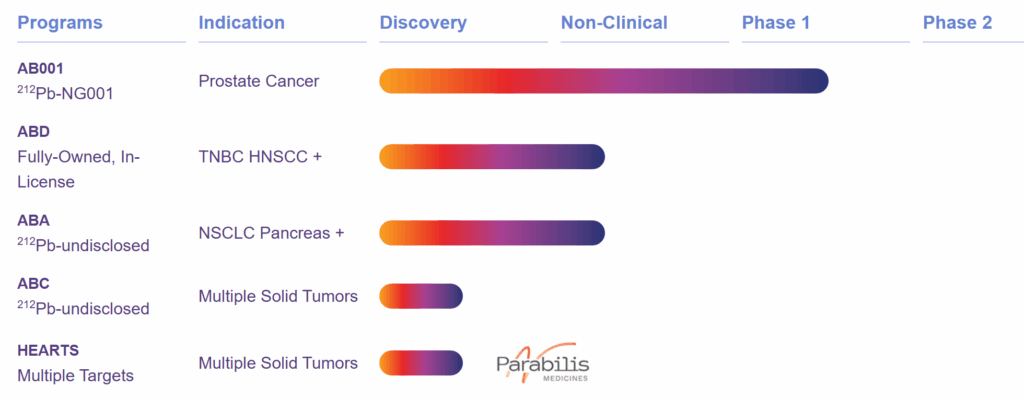
“First, we’re focusing on one particular isotope, lead-212, which we believe has some advantages compared to others currently being tested or available,” Daniel explains. “Second, we’re developing technology to manufacture this isotope ourselves.”
The third element represents a fundamental shift in distribution strategy.
“Because lead-212 is an isotope with a relatively short half-life, we’re developing a distributed network—having multiple manufacturing centers in each region relatively close to where the customer, the hospital where the patient will be treated, actually is,” Daniel says. “This reduces as much as possible the risks of anything happening in between.”
This decentralized approach contrasts sharply with the centralized manufacturing hubs that dominate traditional pharmaceutical production, but reflects the realities of managing products where transportation time directly erodes therapeutic efficacy.
ARTBIO has already successfully scaled and shipped both radioactive sources and drug product for lead-212, demonstrating the viability of their manufacturing approach.
Advice for Supply Chain Leaders Entering Radiopharmaceuticals
For professionals transitioning from traditional pharma into radiopharmaceuticals, Daniel recommends a fundamental reset of assumptions.
“I would recommend that anyone approach this field to be very humble with an open mind to learn, unlearn, and relearn,” he says. “There is so much that’s happening and so much that is still changing—whether it’s new modalities, new technologies, new isotopes.”
The learning process requires more than technical knowledge transfer.
“It’s not just a matter of redoing things the same way,” Daniel emphasizes. “It requires rethinking how you’ve been doing it in the past.”
Rather than relying on textbooks or formal training, Daniel advocates for building the right network of colleagues and industry partners who can provide real-world perspectives on managing the unique challenges of time-sensitive, radioactive products.
“Have the right partnerships in terms of colleagues within the company and partners in the industry itself,” Daniel advises. “Have those exchanges, talk about how things are different, and how others might be approaching certain aspects. That is probably the best way—having the right network of people that can help coach you, mentor you, and ask the right questions.”