
- Cellares has entered a collaboration with Seoul National University Hospital (SNUH) to evaluate automated manufacturing for SNUH’s gene-modified hematopoietic stem and progenitor cell therapy for paroxysmal nocturnal hemoglobinuria (PNH).
- The proof-of-concept work will assess transferring SNUH’s manufacturing process to Cellares’ Cell Shuttle platform, including a two-step transfection workflow supported by an integrated single-use electroporation module.

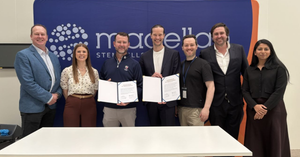
Cellares has entered a collaboration with Seoul National University Hospital (SNUH) to evaluate automated manufacturing for SNUH’s gene-modified hematopoietic stem and progenitor cell (HSPC) therapy for paroxysmal nocturnal hemoglobinuria (PNH). The proof-of-concept program will assess whether SNUH’s manufacturing process can be transferred to Cellares’ Cell Shuttle platform.
The work will include a two-step transfection workflow supported by Cellares’ fully integrated, single-use electroporation module. The companies aim to establish a scalable manufacturing strategy for the PNH program using automated, closed-system manufacturing.
The collaboration is Cellares’ second in Asia and expands its presence in the Asia-Pacific region. The program is intended to support preclinical development and IND-enabling manufacturing as SNUH advances the therapy toward future clinical development in the US. SNUH is developing gene-modified hematopoietic stem cell therapies in collaboration with global institutions.
“Advancing gene-modified HSPC therapies requires a manufacturing approach that can support both the complexity of the process and the rigor of clinical translation. By working with Cellares, we are evaluating how automation can strengthen manufacturing reliability and scalability as we advance this program toward clinical development.”
Professor Youngil Koh, Director of the SNUH GMP Facility
Cellares said gene-modified HSC manufacturing remains labor-intensive, variable and difficult to scale, which can limit clinical development, increase manufacturing costs and constrain patient access. The company said its Cell Shuttle is designed to automate end-to-end cell therapy manufacturing and improve scalability and reliability for autologous cell therapy programs.