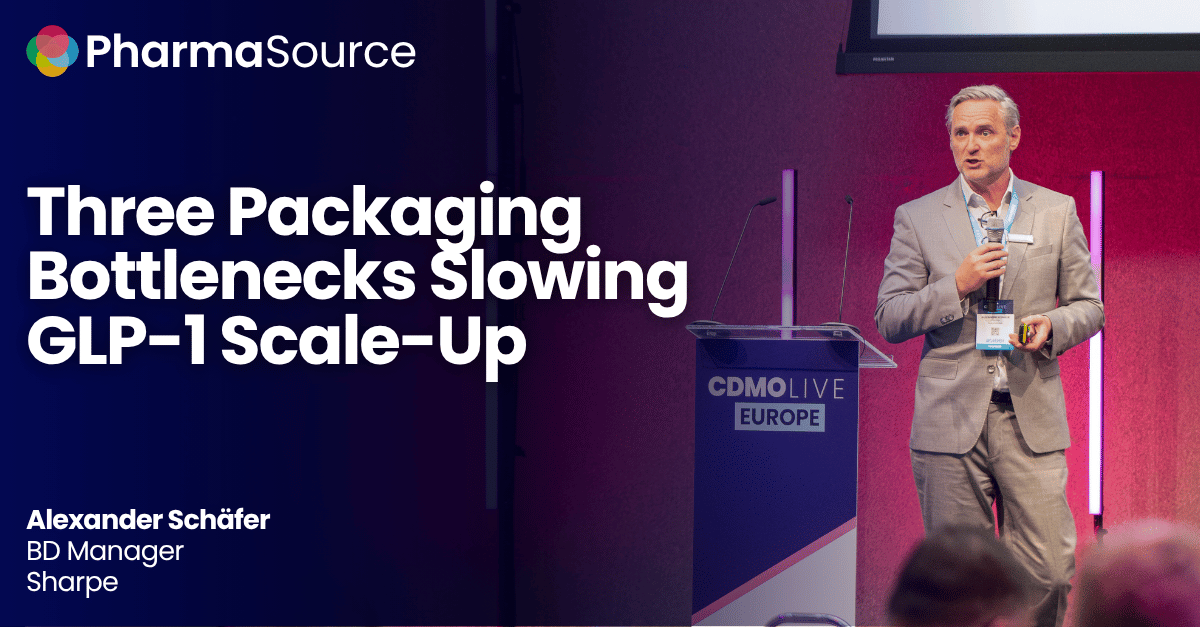
At CDMO Live Europe 2026, Alexander Schäfer, Business Development Manager at Sharp, laid out the scale of the GLP-1 packaging challenge and identified the three collaboration failures most likely to prevent CDMOs and their pharma partners from meeting surging demand.
The glucagon-like peptide 1 (GLP-1) receptor agonist market is growing fast enough to strain the entire contract manufacturing supply chain. A recent report from Fortune Business Insights puts the figure at $254 billion by 2034, at a compound annual growth rate (CAGR) of 12.4%.
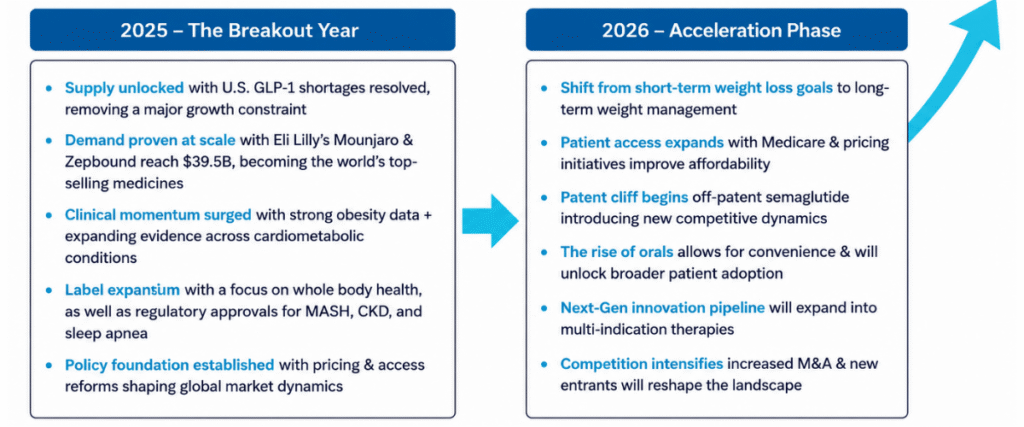
Eli Lilly’s Mounjaro and Zepbound alone reached $39.5 billion in 2025, making them the world’s top-selling medicines. With U.S. supply shortages now resolved and label expansions approved across metabolic-associated steatohepatitis (MASH), chronic kidney disease (CKD), and sleep apnea, 2026 is expected to accelerate both patient access and competitive intensity.
Injectables still hold the dominant share of the market, but oral solid dose (OSD) options are growing. The GLP-1 drug pipeline is estimated to be 70% injectables and 30% OSD by 2030, with more than 60 oral GLP-1 receptor agonist (GLP-1Ra) obesity drugs in active development, four of which are in Phase III. Schäfer was direct on one point: “OSDs will never fully cannibalize injectables, but whatever you do for injectables, you can’t leverage for oral solids. These are completely different technologies.” The efficiency and proven clinical performance of injectable formats means demand for fill-finish, device assembly, syringe and cartridge supply, secondary packaging, and cold-chain distribution will remain high regardless of oral adoption trends.
The Capacity Reality
Building new packaging capacity requires 12 to 36 months of lead time and significant capital expenditure, covering capabilities including fill-finish, device assembly, secondary packaging, cold-chain storage, and bottling and blistering. Schäfer framed a strategic question that CDMOs are currently facing: whether to become fully dedicated to one large pharma customer under a take-or-pay contract structure, or remain flexible and service smaller, multi-device projects for smaller companies on a fee-for-service basis. He suggested the answer may be a hybrid of both, depending on a CDMO’s risk appetite and existing asset base.
Once a packaging partner is engaged, the process follows four phases: Initiation (one to three weeks), Planning (one to three weeks), Execution (six to 52-plus weeks, or longer if a bespoke line must be engineered), and Close-out (one to three weeks). Total elapsed time runs from three months to over 15 months. The implication was clear: engagement needs to begin well before commercial launch is anticipated.
Three Ways to Eliminate Bottlenecks
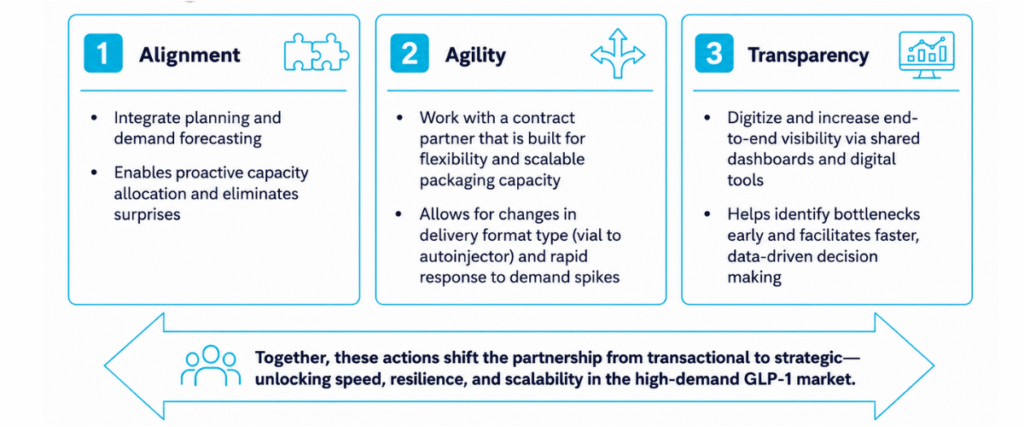
Schäfer closed with a framework built around three actions CDMOs and pharma companies should take together.
- Alignment: integrating planning and demand forecasting to enable proactive capacity allocation and remove scheduling surprises.
- Transparency: digitizing end-to-end visibility through shared dashboards and data tools so that bottlenecks are identified early, and decisions can be made on current information rather than lagging reports.
- Agility: selecting a contract partner built for flexibility, capable of shifting between delivery formats such as vial to autoinjector, and scaling capacity in response to demand spikes. Schäfer described the goal of these three actions as shifting the CDMO relationship from transactional to strategic.