- Trump Administration Delays Pharmaceutical Tariffs to Negotiate Industry-Wide Pricing Agreements
- The Pfizer deal establishes a template for industry-wide agreements incorporating most-favored-nation pricing tied to OECD countries,
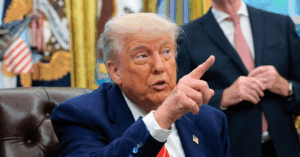
President Donald Trump has delayed implementing threatened 100% tariffs on branded pharmaceutical products as his administration pursues negotiated drug pricing agreements with major manufacturers, according to White House officials.
The administration paused its plan to enact the duties, originally scheduled for October 1, as it attempts to secure agreements with pharmaceutical companies to avoid higher tariffs on name-brand products. The strategy follows a multi-pronged deal announced September 30 with Pfizer, which the president indicated would serve as a model for other drugmakers.
Commerce Secretary Howard Lutnick confirmed the delay during the Pfizer announcement in the Oval Office, stating the administration would “let [the talks] play out and finish these negotiations, because they are the most important thing to the American people.”
Trump threatened the tariffs in a Truth Social post on September 26, warning of duties up to 100% on “any branded or patented Pharmaceutical Product” starting October 1. However, the president has not signed executive orders formalizing the pharmaceutical tariffs, despite issuing proclamations for other products including softwood timber, lumber, wooden furniture, and kitchen cabinetry.
Pfizer Deal Establishes Framework
Under the agreement unveiled September 30, Pfizer committed to investing $70 billion to expand pharmaceutical manufacturing capacity in the U.S. and to participate in a direct purchasing platform called TrumpRx.gov, where it will offer discounts on a “large majority” of its primary care treatments and “some select specialty brands.”
In exchange, Pfizer receives a three-year exemption from forthcoming pharmaceutical tariffs. The deal incorporates most-favored-nation pricing provisions, requiring Pfizer to sell existing drugs to Medicaid patients at prices matching the lowest offered in other developed OECD countries. For new drugs, the company guarantees the same pricing across Medicare, Medicaid, and commercial payers.
Trump stated he expected similar announcements over the next week, warning companies that refuse to negotiate. “What we’d do is put a tariff on them of an equivalent amount and we take it that way and nobody wants to play that game,” Trump said. “So they’re all going to be good.”
The White House confirmed that Eli Lilly is expected to sign the next drug pricing agreement.
Market Response and Analyst Assessments
Pharmaceutical equity markets responded positively to the Pfizer announcement. Pfizer shares closed more than 6% higher on September 30, while Eli Lilly gained 5%. AbbVie and AstraZeneca climbed over 3%, and Johnson & Johnson and Bristol Myers Squibb increased more than 2% each.
BMO Capital Markets analyst Evan Seigerman characterized the deal as establishing “a path for other pharmaceutical players to follow, allowing for headline pricing concessions and a Trump ‘win’ without more punitive implementation” of tariffs or the most-favored-nation policy. The agreement “potentially [shifts policies] away from Pharma tariffs,” Seigerman noted.
JPMorgan analyst Chris Schott stated he “would not be surprised to see a number of similar agreements to help remove uncertainty” regarding most-favored-nation policy implementation and tariffs.
Simon Schropp, a Brussels-based director at global consulting firm BRG, described Trump’s pharmaceutical tariff threat as “an opening salvo that, personally, I think, failed the target by a country mile, just because it’s so over the top.” However, he acknowledged it follows Trump’s established “playbook of outrageous demands and then settle for a headline grabbing deal and then the rest kind of fizzles out.”
Limited Financial Impact Expected for Major Manufacturers
Analysts suggest the most-favored-nation pricing provisions may have manageable financial impacts for most large pharmaceutical companies. JPMorgan’s Schott noted that most-favored-nation pricing for Medicaid is “highly manageable” for Pfizer, as Medicaid pricing already approximates international levels for most medications.
Medicaid represents less than 5% of Pfizer’s U.S. sales and an even smaller percentage of global revenue, according to Leerink Partners analyst David Risinger. Similar exposure levels characterize most major manufacturers: Medicaid constitutes less than 5% of Bristol Myers Squibb’s U.S. sales, less than 7% of Regeneron’s domestic revenue, and approximately 8% of Eli Lilly’s and AbbVie’s domestic sales.
Johnson & Johnson, Merck, Amgen, and Biogen all report Medicaid exposure at or below 10% of U.S. sales. Gilead Sciences faces greater exposure at approximately 20% of domestic sales, reflecting Medicaid’s significant role in HIV prevention and treatment.
Schott indicated he expects a “limited impact” from the provision requiring most-favored-nation pricing on new drugs, suggesting Pfizer and the broader industry will likely raise prices abroad rather than lower them in the U.S. The provision would apply to a small number of treatments annually and is “much more digestible” than broad implementation across existing product portfolios.
Manufacturing Investments Position Companies for Exemptions
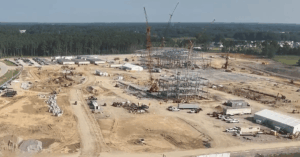
Most major pharmaceutical manufacturers have announced new U.S. manufacturing or research facility investments in recent months, potentially positioning them favorably for tariff exemption agreements. Johnson & Johnson, AstraZeneca, AbbVie, Roche, Novo Nordisk, and Amgen have all unveiled domestic expansion plans.
British pharmaceutical companies have been particularly active. GSK is constructing an $800 million facility in Pennsylvania, while AstraZeneca announced a $50 billion U.S. investment plan extending to 2030. These companies appear positioned to qualify for exemptions under Trump’s stated criteria requiring facilities either “breaking ground” or already “under construction.”
 Sign up to the free weekly newsletter for all the latest news, resources and podcasts in pharma manufacturing.