This guest editorial was written by Dan Stanton, Trade Media Relations Expert, Sartorius
Industry consolidation and the rising cost of entry are driving private equity (PE) and venture capital (VC) in manufacturing beyond the traditional CDMO model and towards technology and vendors.
The contract development and manufacturing organization (CDMO) has, since its inception, been a hotbed of PE investment, and has been intrinsic to the growth and strategy of some of today’s largest players (Catalent, Patheon – now Thermo, and Recipharm, for example). PE money continues to drive the industry, with a number of recent deals, including GHO and Ampersand buying Avid Bioservices for $1.1 billion, a PE group’s sizeable investment in PCI Pharma, and – just this week – GI Partners’ acquisition of Charles River Laboratories’ advanced therapies manufacturing business.
But a panel at INTERPHEX in New York last month, entitled “Financeable or Fragile? The Investor Lens on CMC and Manufacturing Execution,” suggested the era of strong PE returns in the CDMO space may be narrowing, with the three investor panelists blunt about why end-to-end CDMOs are a tough sell at the smaller end of the market.
“Investing in a CDMO is very capital-intensive,” said Pavan Marisetti, founder of early-stage fund Moonshot Ventures, a firm focused primarily on investments around the $500K level in AI-enabled therapeutic discovery platforms. “If I have to acquire a medium CDMO, the investment takes at least $300 to $500 million… and even the exits, I’m looking at multiples around 3 to 5x. As a venture investor, that is not enough.”
The limited multiple return is not because the market is shrinking. Blue Matter Consulting put the global CDMO sector at around $275 billion in 2026 back in February, forecasting a rise to $375 billion by 2031 at a 6.3% CAGR, with PE-backed deals consistently making up the majority of M&A activity. But the size of the cheque attached to deals such as the Avid and PCI deals sits well above what most middle-market PE or growth-stage VC can actually write.
PE capital follows the enabling technology, not the end-to-end CDMO
Marisetti, therefore, said he is more focused on “the enabling tech, the tech innovations that are leading towards CDMO outcomes” rather than the end-to-end CDMOs that dominate the conversation.
Alex Ferree, principal with Grant Avenue Capital, meanwhile, does invest in those larger, more established CDMOs but stressed investments were increasingly drawn to companies looking to “implement the types of technology solutions that are going to drive efficiencies during our whole period that Pavan [Marisetti’s] firm is helping to bring to market.”
He continued: “We’re comfortable with a couple of million dollars plus of CapEx needs each year. That fits within our mandate. But you have to figure out where the value creation is going to come from. And typically, technology is one of those core drivers.”
The line between many CDMO providers and tech providers has long been blurred. On the larger side, Lonza and Fujifilm have both boasted various tech platforms and consumable portfolios beyond their clinical and commercial contract manufacturing offerings, while smaller companies, especially in the advanced therapies space (Cellares, for example), have established a contract manufacturing business from their tech platforms.
Bioprocessing equipment and consumables draw early investor interest
Thus, a question was raised from the floor as to whether PE and VC were looking beyond CDMOs and at the companies building the actual platforms that drug-makers run on: the processing equipment and consumables suppliers themselves.
“I think that is the key area for us. The alpha [an investment strategy’s ability to outperform the market] is in underserved, underinvested technology providers,” said Marisetti. “That’s where I think as a venture capitalist, I have an alpha.” He added that a $10 million-shaped position in the right enabling-tech company “would deliver close to 8x our multiple.”
Ferree said that while Grant Avenue has not yet done a deal in the supplier space, it is “an emerging category of private equity interest” and “some of our colleagues at other firms have made some investments.” Specifically, he cited sterile filtration components going into biologics processing as an “interesting pocket of value.”
Major life science vendors, including Sartorius, Merck KGaA, and Avantor, had been eying up an acquisition of Austrian freeze-handling specialist Single Use Support, but a competitive sale process drew first-round bids from PE firms TPG, EQT, and Astorg, with Novo Holdings eventually buying a majority stake in 2024.
And in November 2025, Vance Street Capital folded fluid-management component-maker Injectech into its VSC Medical Molding platform alongside earlier acquisitions of Plastic Design Company and Resenex, building a precision molding business aimed squarely at life science and bioprocessing customers.
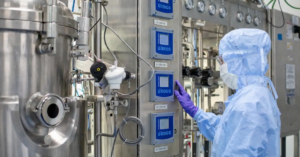
There is huge momentum in the life science equipment and consumables market, with the single-use bioprocessing space alone expected to grow to $33.7 billion by 2030 from $18 billion in 2025, according to a MarketsandMarkets report. Sartorius, described by the report as a “Star player” in the space on the strength of its Biostat STR and Ambr platforms, has continued to expand, opening a 63,000 square-foot Center for Bioprocess Innovation in Massachusetts in November 2024 and completing a single-use bag manufacturing expansion in Aubagne, France in June 2025.
A fragmented supplier base offers PE a clearer entry — and exit — than CDMOs
Marisetti also pointed to consolidation as a reason to look past CDMOs altogether: any new CDMO entrant’s “capacity to compete against these behemoths consolidating is increasingly low,” he said.
Issa Kildani, managing partner at life-sciences M&A advisor Ambrosia Ventures, agreed the suppliers may be next. “I haven’t seen it personally, but from what I’ve been hearing, it’s been a huge value creation. If there are these suppliers, like the bioprocessors of the world, I think it makes a lot of sense.”
However, the supplier landscape is already dominated by listed giants. Sartorius, Thermo Fisher, Danaher (Cytiva), and Merck KGaA command a combined chunk of the market and can outbid most middle-market bidders when an attractive private asset comes up. But that may be precisely the appeal, as a fragmented base of smaller suppliers, sat in a market with active strategic acquirers, offers PE a relatively clear exit route.
About the Author:
Dan Stanton is a trade journalist specializing in biopharmaceutical manufacturing and processing, with over a decade of experience covering CDMOs, M&A, and bioprocessing technology for publications including BioProcess Insider and Contract Pharma.
Dan Stanton is currently a Trade Media Relations Expert at Sartorius Bioprocess Solutions. Sartorius is referenced in this article as a market participant in the single-use bioprocessing sector. This article is based on independent reporting from the INTERPHEX 2026 panel “Financeable or Fragile? The Investor Lens on CMC and Manufacturing Execution.