The global Contract Research Organization (CRO) market is set to top $93 billion in 2026, as pharma and biotech companies increasingly rely on outsourced expertise to speed up drug development and control costs. From clinical trials to regulatory affairs, CROs have become essential partners in modern R&D. Here’s what procurement teams need to know about the CRO market in 2026 — and how to build smarter partnerships.
The pharmaceutical and biotech industries are witnessing rapid growth and innovation, driving the need for efficient research and development (R&D) processes. Contract Research Organizations (CROs) have emerged as key partners providing outsourced services across various domains such as preclinical services, clinical trials management, regulatory affairs, and more.
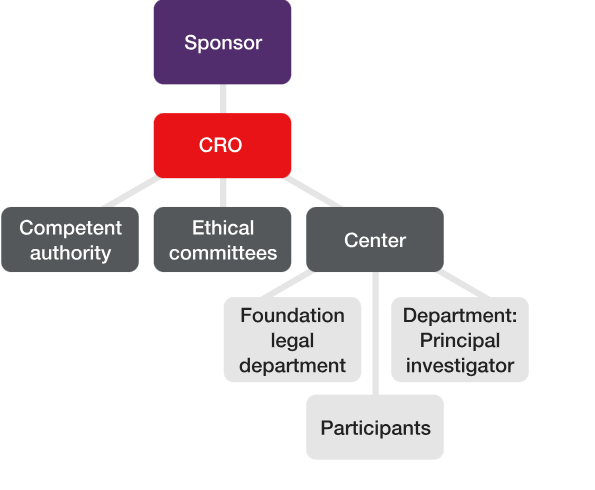
Contract Research Organizations, are external service providers that offer specialised support to pharmaceutical and biotech companies. They play a critical role in accelerating drug development, reducing costs, and enhancing operational efficiency for their clients.
Breakdown of main services offered by CROs-
1. Preclinical Services
Preclinical testing, including in vitro and in vivo studies, to assess the safety and efficacy of drug candidates before human trials.
2. Clinical Trials Management
Planning, execution, and oversight of clinical trials, ensuring adherence to protocols, data collection, and regulatory compliance.
3. Clinical Data Management
Collection, validation, and analysis of clinical trial data, ensuring accuracy and compliance with regulatory standards.
4. Biostatistics and Statistical Analysis
Application of statistical methods to analyze clinical trial data, providing insights on efficacy, safety, and patient outcomes.
5. Regulatory Affairs
Expertise in navigating complex regulatory requirements, ensuring compliance with local and international regulations.
6. Pharmacovigilance and Drug Safety
Monitoring, evaluation, and reporting of adverse events and side effects associated with investigational drugs and marketed products.
7. Medical Writing
Preparation of regulatory documents, study protocols, investigator brochures, and other scientific and medical documents.
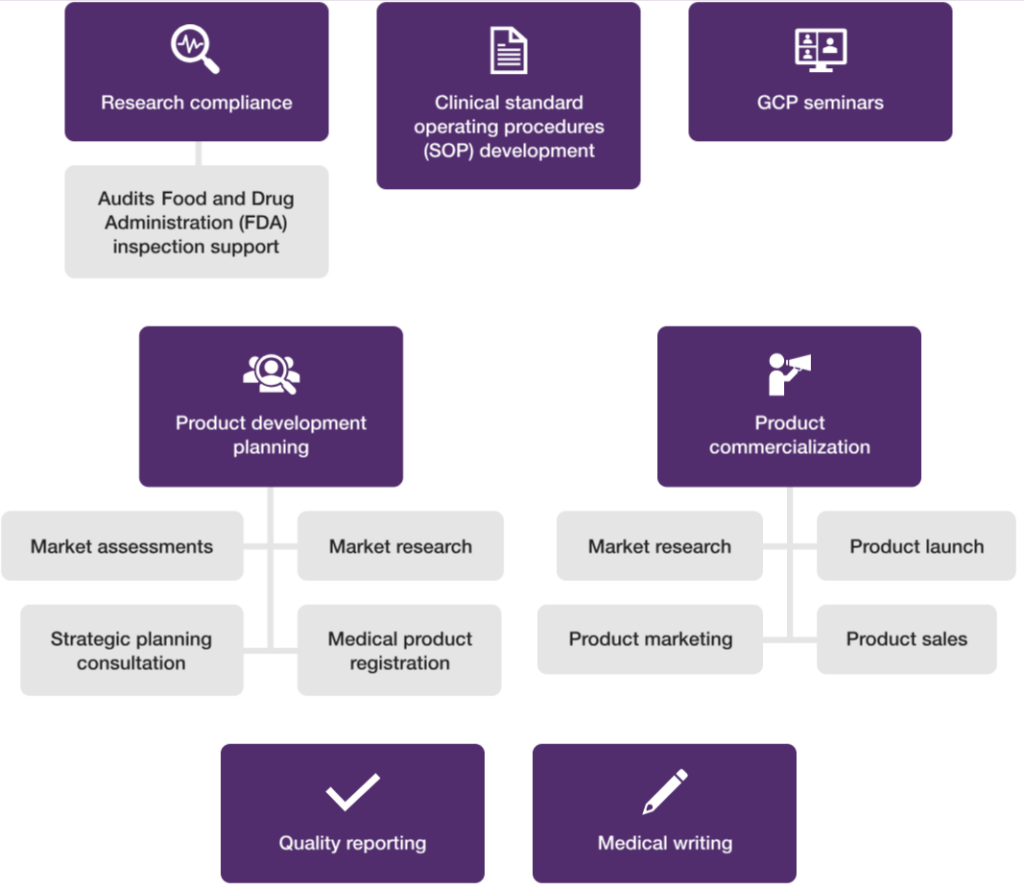
The FSP Model and “FSP 2.0”
Functional Service Provider (FSP) Models
Alongside traditional full-service outsourcing, many sponsors are adopting Functional Service Provider (FSP) arrangements, where a CRO supplies dedicated functional teams (e.g., biostatistics, data management, or clinical monitoring) that integrate directly into the sponsor’s own processes, rather than running the entire trial. Industry analysts describe an emerging “FSP 2.0” model for 2026, in which these partnerships rely on centralized, data-savvy teams using AI-enhanced workflows rather than pure staff augmentation, per ACL Digital’s 2026 CRO trends analysis. This hybrid approach gives sponsors more flexibility to scale specific functions up or down without committing to a single full-service vendor.
CRO vs. CDMO — What’s the Difference?
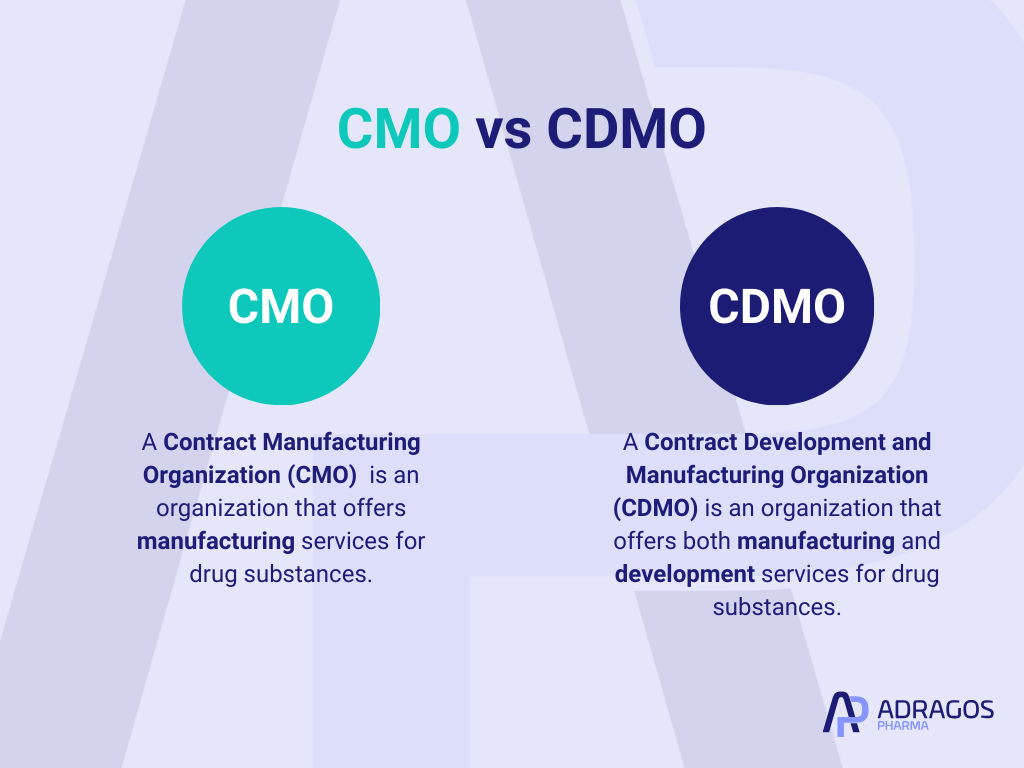
Because the two terms are often used interchangeably by non-specialists, it’s worth a short clarifying note: a Contract Research Organization (CRO) supports the research and development side of the pharma value chain — preclinical studies, clinical trial management, biostatistics, regulatory affairs, and pharmacovigilance. A Contract Development and Manufacturing Organization (CDMO) supports the manufacturing side — producing the active pharmaceutical ingredient or finished drug product at clinical or commercial scale. Some companies operate as both (a “CRDMO”), but the distinction matters for procurement teams evaluating sourcing risk, since regulatory developments like the BIOSECURE Act affect each category differently.
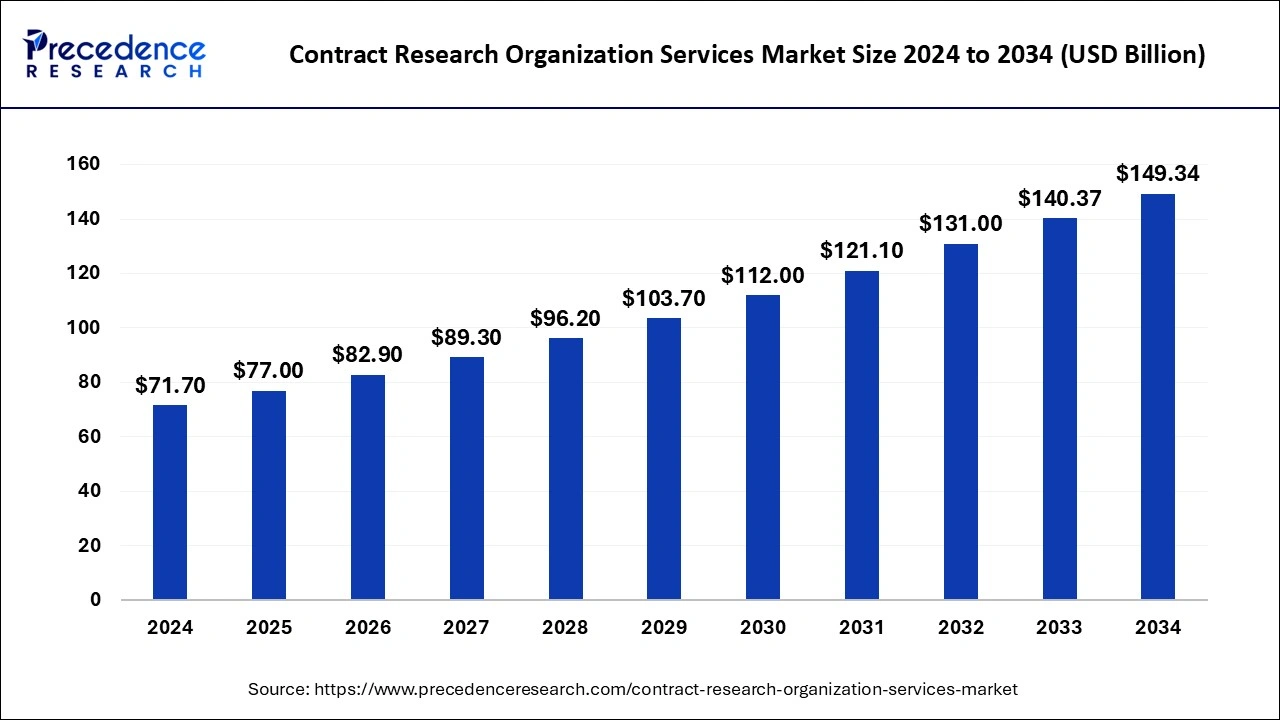
Contract Research Organization Market Trends
The global contract research organization (CROs) services market size is calculated at USD 77.00 billion in 2025 and is predicted to increase from USD 82.90 billion in 2026 to approximately USD 158.58 billion by 2035, growing at a CAGR of 7.49% from 2026 to 2035.
By service segment, clinical research services are expected to lead the market with roughly 41% share in 2026, and Phase I studies are projected to capture the largest phase-specific share at around 48%, reflecting continued growth in first-in-human testing volumes, per Coherent Market Insights.
How to partner better with Contract Research Organizations
In order to establish better partnerships with PAT suppliers and effectively manage costs without compromising quality, pharmaceutical procurement teams can consider the following strategies:
Clearly Define Project Requirements and Expectations
Clearly communicate project goals, timelines, deliverables, and quality expectations to ensure alignment between the pharmaceutical company and the CRO.
Foster Open Communication Channels
Establish regular communication channels, such as project meetings and status updates, to foster collaboration, address concerns, and ensure transparency.
Establish Performance Metrics and Key Performance Indicators (KPIs):
Define measurable performance metrics and KPIs to monitor the CRO’s performance, track progress, and address any deviations from agreed-upon standards.
Conduct Thorough Cost-Benefit Analyses
Evaluate the value proposition of engaging with a CRO by conducting comprehensive cost-benefit analyses, considering factors such as expertise, quality, timelines, and cost.
Explore Flexible Pricing Models and Contracts
Negotiate flexible pricing models, such as milestone-based payments or risk-sharing arrangements, to align incentives and optimize cost structures.
Streamline Processes and Eliminate Inefficiencies
Collaborate with CROs to identify and streamline inefficient processes, eliminating redundancies, and optimizing resource utilization.
Leverage Technology and Automation
Embrace technological advancements and automation solutions to improve operational efficiency, data quality, and cost-effectiveness.
Develop Long-Term Partnerships for Cost Optimization
Establish long-term partnerships with preferred CROs to leverage economies of scale, improve cost predictability, and foster continuous process improvement initiatives.

Source- Crown Bioscience