- ICH Q3A sets a 0.10% identification threshold for impurities — but most commercial PEG24 contains 0.5–5% homolog impurities
- Once PEG is conjugated into an ADC linker or peptide, those impurities cannot be removed downstream
- New manufacturing data shows homolog impurities below 0.10% are achievable for PEG4–PEG12, and below 0.15% for PEG16–PEG24
The Impurity Problem
As ADC linker complexity grows and peptide therapeutics incorporate longer PEG chains for pharmacokinetic improvement, a quality issue is drawing increased regulatory attention: homolog impurities in monodisperse PEG.
Monodisperse PEG, used extensively in XDC linker design and peptide modification, is engineered to be a single defined molecular species. In practice, synthesis introduces PEG n-1 and n+1 homolog impurities: structurally near-identical molecules that differ by one ethylene oxide unit. For PEG24, the commercially available norm is 0.5–5% PEG23 impurity, with significant batch-to-batch variation.
These impurities carry over into conjugated products. Unlike small-molecule synthesis impurities that can be addressed through downstream purification, PEG homologs are not effectively removed after conjugation. What enters the linker stays in the drug substance.
Regulatory Framework
ICH Q3A, the guideline governing impurities in new drug substances, sets clear thresholds:
- Identification threshold: 0.10%
- Qualification threshold: 0.15%
For ADC and XDC developers specifically, the FDA’s guidance on Clinical Pharmacology Considerations for Antibody–Drug Conjugates requires that unconjugated payloads, linkers, and pharmacologically active species be evaluated for safety risk — including QT interval prolongation — in a manner consistent with small-molecule drugs. That means impurity standards developed for small molecules now apply directly to your PEG linker components.
If your PEG supplier’s certificate of analysis is showing homolog impurities above 0.10%, you may face qualification requirements that consume time and resources, and which could have been avoided at source.
Bath-to-Batch Consistency
Monodisperse PEG synthesis relies on stepwise chain elongation. Each additional unit introduces another opportunity for off-target chain termination or extension, meaning homolog impurity accumulates as chain length increases. Separation becomes progressively harder: by PEG16–PEG24, the structural similarity between n and n±1 species makes chromatographic resolution a significant technical challenge.
This is why most commercial PEG above PEG12 carries impurity levels that would not meet ICH Q3A identification thresholds and why batch-to-batch consistency is a persistent problem for drug developers specifying longer-chain PEG components.
Manufacturing Specifications and GMP Status
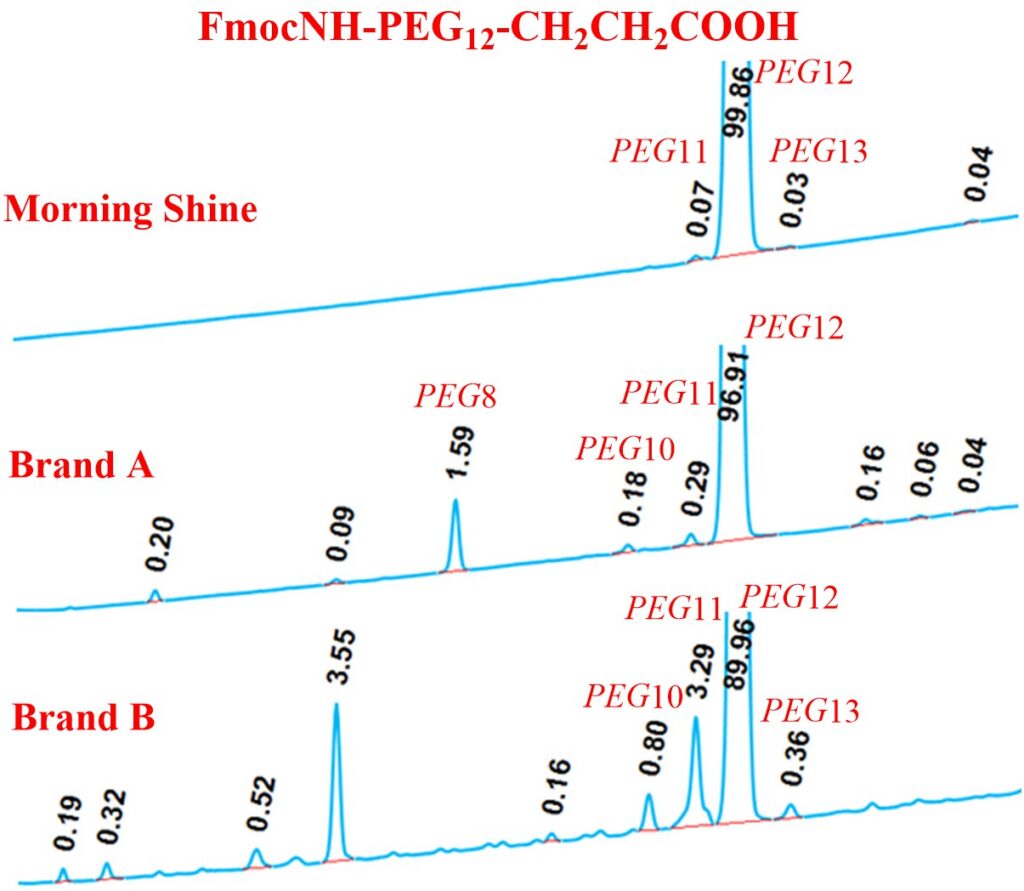
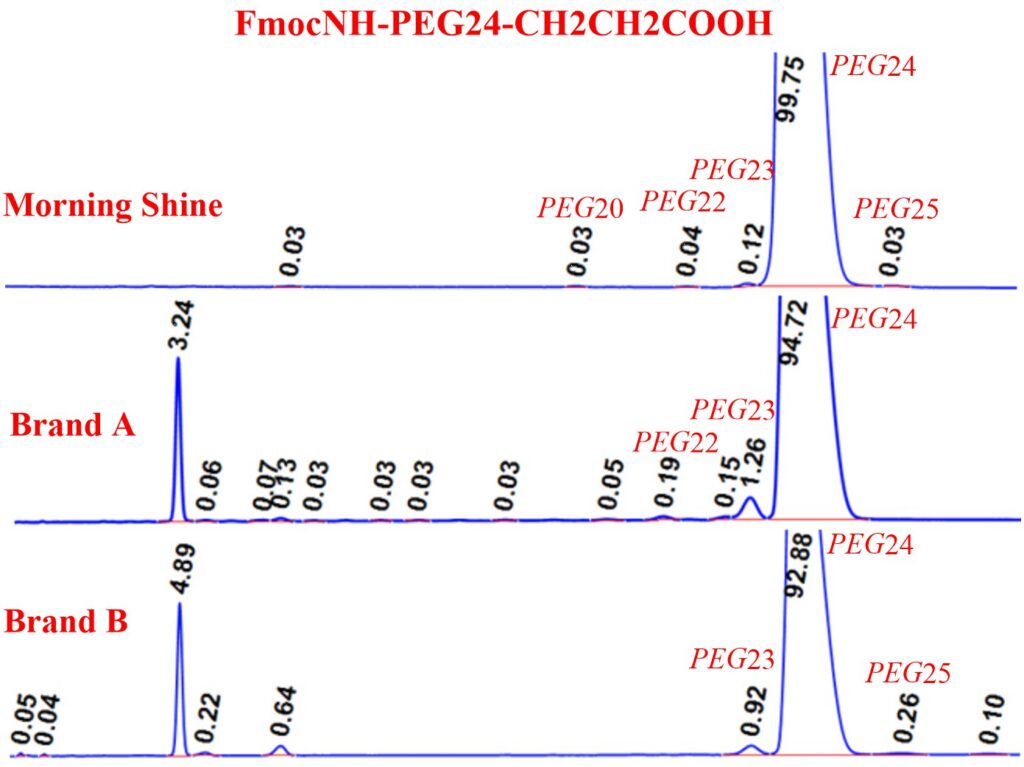
Morning Shine Pharma has published comparative HPLC chromatogram data for FmocNH-PEG12-CH2CH2COOH and FmocNH-PEG24-CH2CH2COOH against two competing commercial suppliers. The company’s current manufacturing capabilities for monodisperse PEG:
- PEG4–PEG12: homolog impurities <0.10%
- PEG16–PEG24: homolog impurities <0.15%
- Batch sizes up to 50 kg under GMP-compliant manufacturing conditions
The Morning Shine PEG12 data meets ICH Q3A identification thresholds across all detected homologs. The PEG24 data meets the qualification threshold — a level not previously demonstrated at commercial scale for longer-chain PEG, according to the company.
Questions For Your Current PEG Supplier
If you are developing ADCs, peptide therapeutics, or oligonucleotide-based drugs that incorporate monodisperse PEG, the following are worth verifying with your current supplier:
- What is the documented homolog impurity level for each PEG chain length in your specification, and does it meet ICH Q3A identification thresholds?
- How consistent is batch-to-batch purity data, and is full HPLC data available for each lot?
- Is the supplier operating under GMP conditions and able to scale to your clinical and commercial batch requirements?
Request specifications or samples
Morning Shine Pharma supplies high-purity monodisperse PEG building blocks to global drug developers. To discuss specifications or request samples, contact: ch********@*******rm.com