
Clinical trial materials, often called CTM, are the human ready doses of an investigational product, placebo, or comparator drug that keep a clinical trial running. Getting their manufacturing right, from formulation through batch release, is one of the most operationally demanding parts of drug development.
This guide focuses on what clinical trial materials are and how they are manufactured: the strategies, quality requirements, and regulatory considerations involved. For market sizing, end to end supply chain operations, and technology like RTSM and cold chain logistics, see our companion guide, Clinical Trial Supply 2026: Market Size, CDMOs & AI Trends.
Market Size
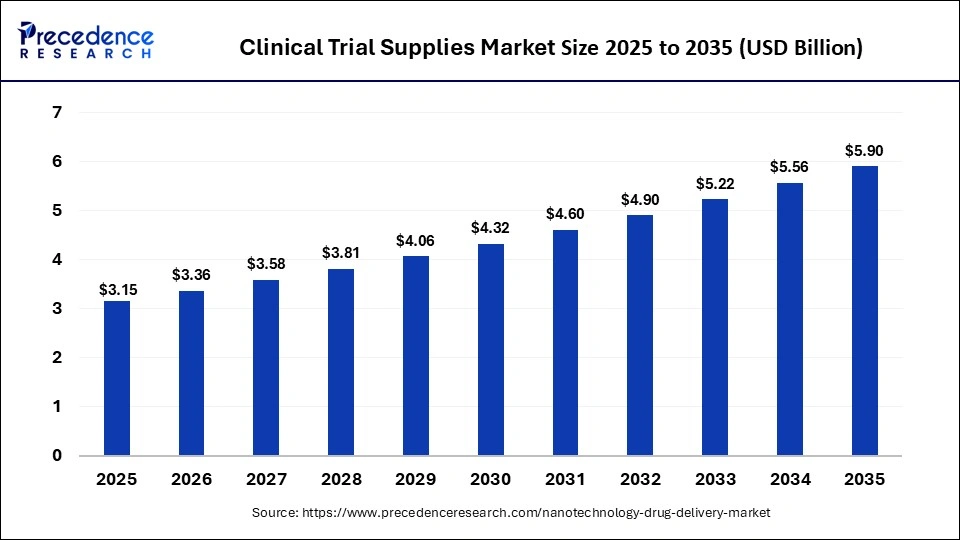
The global clinical trial supplies market size was calculated at USD 3.15 billion in 2025, and is anticipated to hit around USD 3.36 billion by 2026, and is projected to surpass around USD 5.9 billion by 2035, growing at a CAGR of 6.48% from 2026 to 2035.(Source- Precedence Research)
What Are Clinical Trial Materials?
Clinical trial materials (CTM) are pharmaceutical products manufactured in a finished form suitable for administration to clinical trial participants but not intended for commercial sale. These materials form the backbone of clinical research, allowing for the scientific evaluation of investigational products before they reach the market.
CTMs typically include:
- Investigational medicinal products (IMPs) – The test drug being studied
- Placebos – Inactive substances matching the appearance of the test drug
- Comparator products – Existing approved drugs used as reference points
- Ancillary supplies – Supporting materials needed for drug administration
Before manufacturing clinical trial materials, developers must create a comprehensive plan and timeline to guide them through the development and clinical trial process, ensuring all regulatory requirements are met while optimizing resources.
Latest Clinical Trial Materials News-
-

SK pharmteco Supports GEMMABio’s Phase 1/2 Trial of SMA1 Gene Therapy
-

Just-Evotec Biologics Initiates Phase 1 Trial of $123.9M Orthopoxvirus Antibody Program
-

Artis BioSolutions Launches Genetic Medicines Center in Spain
-

Matica Biotechnology Partners with VaxDome to Advance Hybrid Antiviral Vaccine Candidates
-

ProBio Supports GlyTR CAR-T Program with GMP AAV6 Manufacturing
-

Mabion Signs LoI With Oddifact to Advance MabionCD20 in Rare Diseases
CTM vs IMP vs IND: Clarifying the Terminology
These three terms are often used loosely and interchangeably, which causes confusion for teams new to clinical supply.
- Clinical trial materials (CTM) is the broadest, most commonly used industry term, covering everything administered or used to support a clinical trial: the investigational product, placebo, comparator, and ancillary supplies.
- Investigational medicinal product (IMP) is the formal regulatory term used primarily in the EU and UK, referring specifically to the pharmaceutical form of an active substance being tested or used as a reference in a trial, including placebos.
- Investigational new drug (IND) is a US regulatory term, referring to the FDA application and status that allows an unapproved drug to be shipped for use in a clinical trial, rather than to the physical material itself.
In short, CTM is the material, IMP is its EU regulatory classification, and IND is the US regulatory pathway that authorizes its use.
Key Considerations in CTM Manufacturing
Regulatory Compliance and cGMP Guidelines
When manufacturing clinical trial materials, FDA current Good Manufacturing Practice (cGMP) guidelines must be followed meticulously. Improper manufacturing practices can lead to contamination, which is particularly problematic for biologics that cannot be sterilized like small molecule drugs.
Best practices for cGMP compliance include:
- Implementing a written pharmaceutical quality control plan
- Maintaining a controlled, sterile manufacturing environment
- Recording accurate and consistent data throughout the manufacturing process
cGMP guidelines apply to most drugs in phase I and II development, especially vaccines, gene therapy products, recombinant and non-recombinant therapeutic products.
Quality by Design in CTM Manufacturing
Quality by Design (QbD) principles are instrumental in ensuring high-quality clinical trial materials. First proposed by Dr. Joseph M. Juran in 1992, QbD suggests that quality issues in products typically stem from design shortcomings rather than production errors.
Fundamental QbD principles in CTM manufacturing include:
- Determining crucial characteristics of the drug product
- Identifying critical quality attributes
- Employing process design to create drug products with defined critical material attributes
- Identifying critical process parameters
The FDA strongly emphasizes QbD principles for all drug manufacturers to protect public safety and ensure that cGMP guidelines are maintained throughout the manufacturing process.
The Evolution of CTM Manufacturing Approaches
Traditional Bulk Manufacturing
Traditionally, clinical trial materials are manufactured in large bulk batches, which is suitable for large-scale clinical trials. This approach:
- Reduces the number of batches required
- Minimizes analytical testing
- Achieves economies of scale
However, bulk manufacturing can lead to inefficiencies and waste if not all materials are used in the clinical trial. Additionally, this approach offers limited flexibility when changes in clinical trial timelines occur or additional materials are needed.
Bright-Stock Manufacturing
Bright-stock manufacturing offers more flexibility than traditional bulk manufacturing. In this approach:
- Products are manufactured in bulk upfront
- Materials are held in final containment without labeling
- Products are labeled and distributed only when needed
This method allows for more efficient use of stock since products are only labeled when required. However, there are still limitations since the CTM product is already packaged, offering no flexibility for varied doses or providing additional units for clinical trials.
Personalized Real-Time Manufacturing
For challenging patient populations and specialized trial designs, personalized real-time manufacturing has emerged as an effective solution. This approach involves:
- Producing CTMs only when specifically required
- Manufacturing in small batches
- Immediate packaging, labeling, and distribution
This method is particularly valuable for adaptive trial designs, rare disease studies, and personalized medicine applications where patient-specific formulations may be necessary.
Benefits of On-Demand CTM Manufacturing
The shift toward flexible, on-demand CTM manufacturing offers several significant advantages:
1. Reduced Waste
On-demand manufacturing enables the precise production of required CTM quantities, significantly reducing waste compared to traditional batch manufacturing. This approach:
- Minimizes excess CTMs that might become obsolete due to protocol amendments
- Reduces losses from trial terminations or changes in patient enrollment
- Utilizes resources more efficiently
- Decreases waste-associated costs
2. Increased Flexibility
On-demand manufacturing provides exceptional flexibility, allowing for:
- Adjustments to manufacturing schedules based on clinical trial timeline changes
- Adaptation to protocol modifications such as dose escalation or de-escalation
- Quicker decision-making in clinical settings
- Reduced study delays
3. Improved Efficiency
The on-demand approach eliminates the need for large-scale production runs and reduces the time required for product release compared to traditional batch manufacturing, streamlining the entire CTM supply chain.
4. Cost-Effectiveness
By reducing lead times and minimizing waste, flexible on-demand manufacturing contributes significantly to cost-effectiveness in clinical trials through:
- Efficient resource utilization
- Reduced product losses
- Lower inventory carrying costs
- More sustainable manufacturing practices
5. Patient-Focused Approach
On-demand manufacturing enhances patient-centered clinical trials by:
- Minimizing supply shortages, delays, or interruptions
- Improving the overall patient experience
- Potentially increasing patient adherence and retention
- Supporting personalized medicine approaches
Strategic Approaches to CTM Manufacturing
There is no one size fits all approach to CTM manufacturing. The most effective strategy is typically determined on a per trial basis, considering product type and stability requirements, clinical trial design and patient population, geographic distribution of trial sites, and regulatory requirements across regions. For how these manufacturing decisions connect to the broader supply chain, from raw materials through distribution, see our Clinical Trial Supply guide.
Comparator Sourcing and Blinding
Many clinical trials, particularly Phase III studies, require a comparator, an already approved drug used as a reference point against the investigational product. Sourcing comparators reliably is a distinct manufacturing and procurement discipline, separate from producing the investigational product itself.
- Regional sourcing rules – Some regions, including the EU, require that comparator products used in a trial be sourced locally rather than imported, which can affect packaging design when formats differ between markets.
- Chain of custody and documentation – Comparator sourcing requires full pedigree documentation reflecting the product’s path from the original manufacturer to the point of delivery, both to protect trial integrity and to guard against counterfeit product entering the supply chain.
- Shelf life and lot planning – Sourcing large, single lots with maximum remaining shelf life reduces the need for repeated resupply and minimizes regulatory burden during later IND or NDA submissions.
- Blinding – When a trial is blinded, comparator and investigational products must be made visually indistinguishable through overencapsulation, repackaging, or custom carton design, without compromising the comparator’s stability or a participant’s ability to safely identify the product in an emergency.
Because comparator sourcing sits outside a sponsor’s own manufacturing process, it is frequently outsourced to specialist providers or built into a broader clinical supply partnership.
Evaluating Manufacturing Capability in a CDMO
When evaluating a CDMO specifically for manufacturing fit, the questions to ask are whether the facility has a track record of successful regulatory inspections, proven experience with your specific dosage form and modality, and the batch flexibility to support on demand or personalized real time production if your trial design requires it. For the fuller vendor evaluation checklist, including logistics, RTSM integration, and global distribution capability, see how to choose a clinical trial supply partner.
CTM Manufacturing for Specialized Trial Types
Rare Disease Clinical Trials
The increased industry focus on rare disease treatments has influenced CTM manufacturing approaches. These trials often:
- Involve smaller patient populations
- Require specialized manufacturing capabilities
- Need flexible production schedules
- Benefit significantly from on-demand manufacturing approaches
Decentralized and Hybrid Clinical Trials
The growing trend toward virtual, hybrid, and decentralized clinical trial models is transforming CTM manufacturing requirements. These models often require:
- Direct-to-patient shipment capabilities
- Enhanced packaging for patient self-administration
- Smaller, more frequent batch productions
- More robust tracking and chain-of-custody documentation
Personalized Medicine Approaches
The rise of personalized medicine, which tailors treatments to individual patients based on genetic, environmental, and lifestyle factors, creates unique challenges for CTM manufacturing, including:
- Need for individualized dosing or formulations
- Rapid turnaround times for patient-specific materials
- Enhanced analytical testing requirements
- Complex logistics for delivery to patients
Regulatory Considerations in CTM Manufacturing
Global Regulatory Compliance
CTM manufacturing must comply with regulations across all regions where the clinical trial is conducted. Key regulatory considerations include:
- Meeting FDA, EMA, and other regional regulatory requirements
- Ensuring consistent quality across manufacturing sites
- Maintaining proper documentation throughout the manufacturing process
- Implementing appropriate change control procedures
GMP Requirements for Different Clinical Phases
Regulatory expectations for CTM manufacturing vary depending on the clinical trial phase:
Phase I Trials:
- Focus on safety and quality control
- Sometimes subject to slightly modified GMP requirements
- Emphasis on batch consistency and documenting manufacturing processes
Phase II/III Trials:
- Stricter GMP requirements approaching commercial standards
- Increased focus on process validation
- More comprehensive stability testing requirements
- Enhanced documentation requirements
Future Trends in CTM Manufacturing
Manufacturing Technology
Continuous manufacturing processes, 3D printing for personalized dosage forms, and automation are increasingly integrated into CTM production, reducing changeover time between small batches and supporting the shift toward personalized real time manufacturing.
Enhanced Collaboration Models
The industry continues to recognize the importance of collaboration and data sharing in clinical research, influencing CTM manufacturing through improved information sharing between sponsors and manufacturers, standardized technology transfer, and more integrated development partnerships.
For sustainability practices across packaging, transportation, and the broader supply chain, see our Clinical Trial Supply guide
Key Takeaways for CTM Manufacturing Success
- Patient centricity is paramount. Always prioritize patient needs when designing CTM manufacturing strategies.
- Flexibility drives efficiency. On demand and personalized real time manufacturing offer significant advantages for many trial types.
- Quality cannot be compromised. Adherence to cGMP and QbD principles is essential regardless of manufacturing approach.
- Comparator management matters. Reliable, well documented comparator sourcing and blinding are as critical to trial integrity as the investigational product itself.
- Regulatory compliance must be maintained, including current EU CTR/CTIS and FDA decentralized trial requirements.
Frequently Asked Questions
What are clinical trial materials?
Clinical trial materials (CTMs) are pharmaceutical products manufactured specifically for use in clinical research studies. They include investigational products, placebos, comparators, and ancillary supplies needed for the trial.
What is the difference between clinical manufacturing and commercial manufacturing?
Clinical manufacturing focuses on producing smaller batches of pharmaceuticals specifically for research purposes, often requiring greater flexibility and adaptability. Commercial manufacturing involves large-scale production of approved drugs for market distribution, with emphasis on consistency, efficiency, and cost-effectiveness.
What are the main challenges in clinical trial material manufacturing?
Key challenges include maintaining regulatory compliance, ensuring product quality consistency, managing supply chain complexity, adapting to protocol changes, minimizing waste, and accommodating the increasing trend toward personalized medicine approaches.
How can on-demand manufacturing improve clinical trial efficiency?
On-demand manufacturing improves efficiency by reducing waste, increasing flexibility to accommodate protocol changes, enabling more patient-centric approaches, reducing costs associated with excess inventory, and facilitating faster decision-making in adaptive trial designs.
What regulatory requirements apply to clinical trial material manufacturing?
CTM manufacturing must comply with current Good Manufacturing Practice (cGMP) guidelines, Quality by Design principles, and specific regulatory requirements from authorities like the FDA and EMA. Requirements typically increase in stringency as products progress from early to late-phase clinical trials.