The pharmaceutical contract development and manufacturing organization (CDMO) sector is experiencing unprecedented growth, driven by increasing demand for specialized expertise in clinical trial compliance and regulatory adherence. As drug development becomes more complex and globalized, pharmaceutical companies are increasingly turning to CDMOs that demonstrate robust Good Clinical Practice (GCP) capabilities to ensure their clinical trials meet international ethical and scientific standards.
The global CDMO market is experiencing robust expansion, with GCP-compliant services representing a critical differentiator for contract manufacturers. According to Grand View Research, the pharmaceutical CDMO market is projected to grow at a CAGR of 7.38% from 2025 to 2033, reaching USD 293.6 billion by 2033, with clinical trial services representing one of the key growth drivers within this expanding sector.
This growth reflects several converging trends: the increasing complexity of clinical trials, heightened regulatory scrutiny across global markets, and the pharmaceutical industry’s strategic shift toward outsourcing specialized functions to focus internal resources on core drug discovery and development activities.
The integration of GCP principles into manufacturing operations has become non-negotiable for CDMOs serving clients conducting clinical trials. Regulatory authorities worldwide—including the FDA, EMA, and PMDA—have made GCP compliance a legal requirement for any trial involving investigational medicinal products, creating substantial demand for manufacturing partners who can demonstrate comprehensive quality systems aligned with these standards.
What is Good Clinical Practice?
Good Clinical Practice is an international ethical and scientific quality standard that governs the design, conduct, performance, monitoring, auditing, recording, analysis, and reporting of clinical trials involving human subjects. Established by the International Council for Harmonisation of Technical Requirements for Pharmaceuticals for Human Use (ICH), GCP provides a unified framework that ensures the rights, safety, and well-being of trial participants are protected while guaranteeing that clinical trial data are credible and accurate.
GCP originated from the Declaration of Helsinki in 1964, developed by the World Medical Association as a statement of ethical principles for medical research involving human subjects. Over subsequent decades, these principles evolved into comprehensive regulatory requirements. The ICH E6 guideline, finalized in 1996 and effective from 1997, established the cornerstone of modern GCP standards. The Medicines for Human Use (Clinical Trials) Regulations 2004 and the EU Directive on Good Clinical Practice transformed GCP from voluntary guidelines into legally enforceable requirements in Europe and the UK.
How Does GCP Work in Pharmaceutical Manufacturing?
GCP operates through a comprehensive framework that connects ethical principles, regulatory requirements, and operational standards across the entire clinical trial lifecycle. The system functions through multiple interconnected layers:
Regulatory Framework: GCP compliance is mandated through specific regulations in different jurisdictions. In the United States, Title 21 of the Code of Federal Regulations (parts 50, 56, and 312) governs human subject protection, Institutional Review Board responsibilities, and Investigational New Drug application requirements. In the European Union, the Clinical Trials Regulation (EU) No 536/2014 establishes harmonized standards across member states. Japan’s Pharmaceutical Affairs Law and associated PMDA regulations provide similar oversight.
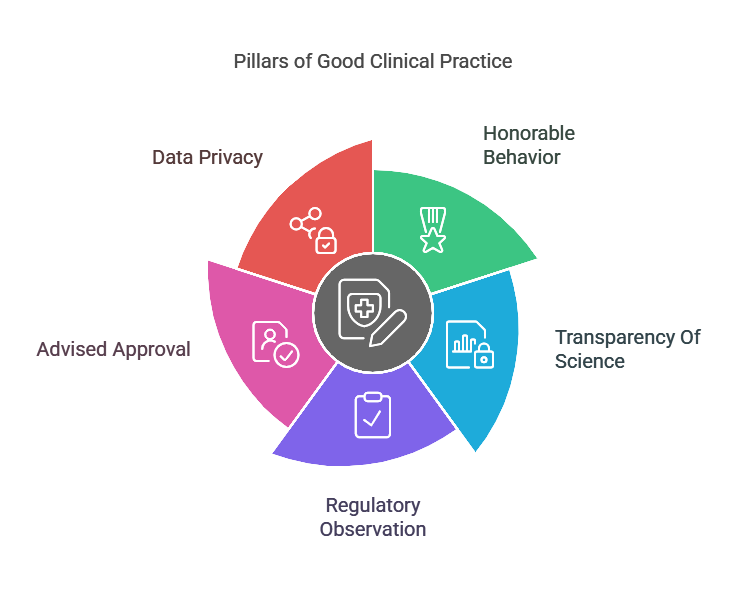
The 13 Core Principles: GCP is built upon 13 fundamental principles that guide all aspects of clinical research and the manufacturing of investigational products:
- Ethical Conduct: All research follows the principles of respect, beneficence, and justice
- Protocol Development: Scientific justification and detailed documentation are required
- Risk Identification: Potential risks and benefits must be identified before trials begin
- Benefit-Risk Assessment: Benefits must outweigh risks for participants
- Independent Review: Ethics committees and institutional review boards must approve protocols
- Protocol Compliance: Trials must follow approved protocols without unauthorized deviations
- Informed Consent: Voluntary, fully informed consent must be obtained from all participants
- Ongoing Assessment: Continuous benefit-risk evaluation throughout the trial
- Investigator Qualifications: Medical professionals must be appropriately qualified and licensed
- Staff Qualifications: All personnel must have appropriate education, training, and experience
- Record Management: Accurate documentation enables reporting, interpretation, and verification
- Confidentiality Protection: Participant privacy must be rigorously maintained
- Good Manufacturing Practice Integration: Investigational products must be manufactured according to GMP standards

Quality Systems Integration: For pharmaceutical manufacturers, GCP compliance requires integration with Good Manufacturing Practice standards. Investigational medicinal products must be manufactured, handled, and stored according to applicable GMP requirements while simultaneously meeting the specific documentation and traceability requirements of GCP. This dual compliance creates unique challenges for CDMOs producing clinical trial materials.
Data Integrity and Monitoring: GCP mandates rigorous systems for data collection, recording, and verification. The recent ICH E6(R2) and E6(R3) updates have emphasized risk-based approaches to trial management, electronic records and signatures, and greater flexibility in trial design while maintaining data quality standards. These updates recognize the increasing role of technology in clinical trials while establishing clear standards for electronic data capture systems and remote monitoring.
Growth Factors Driving GCP-Compliant Manufacturing Demand
Several interconnected factors are accelerating demand for CDMOs with robust GCP capabilities:
Globalization of Clinical Trials: Pharmaceutical companies increasingly conduct multi-regional trials spanning dozens of countries to accelerate development timelines and access diverse patient populations. This globalization creates demand for manufacturing partners who understand the regulatory nuances across different jurisdictions while maintaining consistent GCP standards. CDMOs must navigate varying regulatory requirements in the US, EU, Japan, China, and emerging markets while ensuring harmonized quality standards.
Regulatory Harmonization Through ICH: While the ICH has successfully harmonized many GCP requirements, implementation varies by region. CDMOs that demonstrate expertise in navigating these regional differences while maintaining core ICH E6 compliance provide significant value to sponsors conducting international trials. The acceptance of ICH guidelines by regulatory authorities worldwide facilitates mutual recognition of clinical trial data, but only when trials are conducted to these standards.
Increasing Trial Complexity: Modern clinical trials have become substantially more complex than those conducted even a decade ago. Trials now frequently incorporate adaptive designs, biomarker-driven patient selection, multiple endpoints, and sophisticated statistical approaches. This complexity requires manufacturing partners who can produce consistent investigational products while maintaining the detailed documentation and chain-of-custody requirements that GCP mandates.
Technology Integration: The adoption of electronic data capture systems, remote patient monitoring, decentralized trial models, and digital biomarkers is transforming clinical research. These technological advances require CDMOs to implement validated electronic systems that comply with 21 CFR Part 11 (electronic records and signatures) while maintaining GCP standards. The recent ICH E6(R2) and E6(R3) updates specifically address these technological considerations.
Outsourcing Trend: Pharmaceutical and biotechnology companies increasingly view clinical trial manufacturing as a non-core activity suitable for outsourcing. This strategic shift allows internal teams to focus on drug discovery and early development while leveraging CDMO expertise in GCP-compliant manufacturing, regulatory documentation, and global distribution. The trend is particularly pronounced among small and mid-sized biotechnology companies that lack internal clinical manufacturing capabilities.
Heightened Regulatory Scrutiny: Regulatory authorities worldwide have intensified their focus on GCP compliance through more frequent inspections, detailed audit trails, and strict enforcement actions for non-compliance. FDA and EMA inspections of clinical trial sites and manufacturing facilities have become more rigorous, creating demand for CDMOs with proven inspection readiness and comprehensive quality systems.
Data Integrity Focus: Recent regulatory emphasis on data integrity has elevated the importance of robust electronic systems, audit trails, and documentation practices. The pharmaceutical industry has witnessed several high-profile cases where data integrity failures led to rejected submissions and regulatory sanctions, making GCP compliance a critical risk management priority.
Ethical and Transparency Pressures: Growing public awareness of clinical trial ethics, combined with requirements for trial registry publication and results reporting, has increased stakeholder focus on GCP compliance. Organizations conducting trials face scrutiny from patient advocacy groups, ethics committees, and the media, making partnership with GCP-expert CDMOs a reputational imperative.
Growth Inhibitors and Challenges
Despite strong market growth, several factors create headwinds for GCP-compliant manufacturing:
Resource Intensity: Maintaining comprehensive GCP compliance requires significant investment in personnel, training, systems, and documentation. The detailed record-keeping, monitoring, and verification requirements create operational overhead that increases manufacturing costs. Small and mid-sized CDMOs may struggle to justify these investments, potentially limiting market competition.
Regulatory Complexity: While ICH has harmonized many requirements, significant regional variations persist. Differences in ethics committee processes, informed consent requirements, adverse event reporting timelines, and inspection approaches create compliance challenges for CDMOs supporting multi-regional trials. Navigating these variations requires deep regulatory expertise and well-established quality systems.
Training and Qualification Requirements: GCP mandates that all personnel involved in clinical trial activities receive appropriate training and maintain current knowledge of regulatory requirements. The rapidly evolving regulatory landscape—including recent ICH E6 updates—requires continuous training programs. High staff turnover in the pharmaceutical industry exacerbates this challenge, as new personnel require comprehensive GCP training before assuming responsibilities.
Manufacturing Scale-Up Challenges: Transitioning from clinical trial manufacturing to commercial production presents unique challenges in the GCP context. Clinical trial materials are typically produced in small batches with extensive documentation requirements and stringent change control. Scaling up while maintaining GCP compliance and ensuring comparability between clinical and commercial batches requires careful planning and validation.
Technology Validation Burden: The adoption of electronic systems for data capture, batch records, and documentation management requires extensive validation to demonstrate compliance with GCP and data integrity requirements. Validating these systems according to regulatory expectations demands significant time and resources, potentially delaying implementation of efficiency-improving technologies.
Audit and Inspection Pressure: CDMOs supporting clinical trials face inspections from multiple stakeholders—sponsors, regulatory authorities, and independent auditors. Preparing for and responding to these inspections requires dedicated resources and can disrupt normal operations. Inspection findings, even minor observations, can impact a CDMO’s reputation and marketability.
Protocol Deviations and Change Control: Clinical trial protocols often require amendments as trials progress and new information emerges. Managing protocol changes while maintaining GCP compliance and ensuring all affected parties are properly notified creates operational complexity. Protocol deviations, even when unavoidable, require extensive documentation and justification, consuming significant resources.
Confidentiality and Data Security: GCP’s stringent requirements for protecting participant confidentiality intersect with increasing cybersecurity threats. CDMOs must implement robust information security measures to protect clinical trial data while ensuring appropriate access for monitors, auditors, and regulatory authorities. Data breaches or confidentiality violations can have severe legal and reputational consequences.
Competing Standards: CDMOs must simultaneously comply with multiple quality standards—GCP, GMP, ISO certifications, and various national regulations. These standards sometimes have overlapping but not identical requirements, creating compliance complexity. Ensuring that quality systems satisfy all applicable standards without creating unnecessary duplication requires sophisticated quality management approaches.
Contract Manufacturing for GCP-Compliant Products
Contract Manufacturing Challenges Specific to GCP Compliance
Manufacturing investigational products under GCP standards presents distinct challenges that differ from commercial pharmaceutical production:
Dual Compliance Framework: CDMOs must simultaneously meet GMP requirements for manufacturing quality and GCP requirements for clinical trial conduct. These two frameworks have different focuses—GMP emphasizes product quality and manufacturing consistency, while GCP emphasizes participant protection and data credibility. Integrating these requirements into cohesive quality systems requires careful design and ongoing management.
Batch Size and Flexibility: Clinical trial manufacturing typically involves small batch sizes with frequent changes as protocols evolve and trials progress through phases. Unlike commercial manufacturing, where large-scale, standardized production is the norm, clinical manufacturing requires flexible systems that can accommodate diverse products, dosage forms, and packaging configurations while maintaining full GCP/GMP compliance.
Comparability and Change Management: Clinical trial protocols often span several years, during which manufacturing processes may need modification. Any changes to manufacturing processes, equipment, or facilities require careful comparability assessments to ensure that investigational products remain consistent throughout the trial. GCP requires that these changes be documented and, where appropriate, reported to regulatory authorities and ethics committees.
Blinding and Randomization Support: Double-blind trials require CDMOs to implement sophisticated systems for product blinding and randomization while maintaining the ability to perform emergency unblinding when patient safety demands it. These systems must be validated, secure, and auditable while protecting the trial’s scientific integrity.
Supply Chain Complexity: Clinical trials may involve hundreds of sites across multiple countries, each requiring timely delivery of investigational products with proper storage and handling. Managing this complex supply chain while maintaining temperature control, accountability, and GCP documentation creates significant logistical challenges. Product recalls or supply interruptions can compromise trial integrity and participant safety.
Accelerated Timelines: Clinical development timelines continue to compress as sponsors seek to accelerate time-to-market. CDMOs face pressure to produce investigational products rapidly while maintaining comprehensive GCP compliance. This tension between speed and thoroughness requires efficient processes without compromising quality or regulatory requirements.
Investigator-Initiated Trials: Unlike sponsor-initiated trials, investigator-initiated trials may involve academic researchers with limited pharmaceutical manufacturing experience. CDMOs supporting these trials must provide additional guidance and education to ensure investigators understand GCP requirements and manufacturing constraints.
Accountability and Reconciliation: GCP requires detailed accountability for all investigational products from manufacturing through patient administration or destruction. CDMOs must implement systems that track every unit of investigational product, reconcile inventory regularly, and investigate any discrepancies. This level of detail exceeds typical commercial pharmaceutical tracking requirements.
Documentation Burden: The documentation requirements for GCP-compliant manufacturing significantly exceed those for commercial production. Batch records must include additional information about protocol compliance, distribution records, and accountability. This documentation must be maintained in auditable form and be readily accessible for inspection.
Multiple Stakeholder Management: Clinical trial manufacturing involves coordination among diverse stakeholders—sponsors, investigators, ethics committees, regulatory authorities, and clinical research organizations. Managing communications and ensuring all parties have appropriate information while maintaining confidentiality and GCP compliance requires sophisticated management systems.
Selecting the Right CDMO for GCP-Compliant Manufacturing
Choosing a CDMO partner for clinical trial manufacturing requires careful evaluation across multiple dimensions:
- Regulatory Track Record and Inspection History: Request evidence of the CDMO’s regulatory compliance history, including recent FDA, EMA, or other regulatory authority inspection reports. Review Form 483 observations and warning letters (if any) to understand the CDMO’s compliance posture. A clean inspection history demonstrates commitment to GCP/GMP standards, while recurring issues may signal systemic quality problems.
- GCP Training Programs: Evaluate the comprehensiveness and currency of the CDMO’s GCP training program. All personnel involved in clinical trial activities should receive initial and ongoing GCP training, with documentation of training completion and competency assessment. The training program should address not only ICH E6 core principles but also regional regulatory requirements relevant to your trial.
- Quality Management Systems: Assess whether the CDMO’s quality management system appropriately integrates GCP and GMP requirements. The system should include robust change control, deviation management, corrective and preventive action (CAPA) processes, and comprehensive document control. Request evidence that the quality system has been validated and is subject to regular internal audits.
- Technology Platform and Data Integrity: Examine the CDMO’s electronic systems for batch record management, inventory tracking, and documentation. These systems should comply with 21 CFR Part 11 requirements for electronic records and signatures, including audit trails, access controls, and validation documentation. Assess the CDMO’s approach to data integrity using the ALCOA+ principles (Attributable, Legible, Contemporaneous, Original, Accurate, Complete, Consistent, Enduring, Available).
- Global Regulatory Expertise: For multi-regional trials, the CDMO should demonstrate expertise in navigating regional regulatory differences. This includes familiarity with FDA, EMA, PMDA, and other relevant regulatory authority requirements, as well as experience with country-specific import/export regulations for investigational products.
- Flexibility and Scalability: Assess the CDMO’s ability to accommodate protocol changes, dose modifications, and scale-up as your program progresses. Clinical programs evolve as trials advance through phases, and your CDMO partner should have the technical capabilities and regulatory experience to support this progression.
- Supply Chain and Distribution Capabilities: Evaluate the CDMO’s logistics infrastructure for managing clinical trial supplies. This includes temperature-controlled storage and distribution, global shipping capabilities, track-and-trace systems, and experience with depot management. The CDMO should have established relationships with qualified distributors and understand country-specific importation requirements.
- Blinding and Randomization Services: If your trial requires blinding, assess the CDMO’s experience with blinded manufacturing, packaging, and emergency unblinding procedures. The systems should be validated, secure, and compliant with regulatory expectations.
- Therapeutic Area Experience: While GCP principles apply universally, experience in your specific therapeutic area can be valuable. CDMOs with relevant therapeutic expertise may better anticipate challenges related to product stability, patient populations, or regulatory requirements specific to your indication.
- Communication and Project Management: Strong project management and communication systems are essential for successful clinical trial manufacturing. Assess the CDMO’s project management approach, communication protocols, and escalation procedures. Regular, transparent communication helps identify and resolve issues before they impact trial timelines.
- Audit Rights and Transparency: Ensure your agreement with the CDMO includes appropriate audit rights, allowing you to conduct GCP audits and sponsor inspections as needed. The CDMO should welcome regulatory authority inspections and have established procedures for supporting these activities.
- Financial Stability and Business Continuity: Evaluate the CDMO’s financial health and business continuity planning. Clinical trials may span several years, and you need confidence that your manufacturing partner will remain viable throughout your program. Review business continuity plans for critical scenarios such as natural disasters, equipment failures, or supply disruptions.
- Capacity and Lead Times: Understand the CDMO’s current capacity and typical lead times for clinical manufacturing. Delays in investigational product supply can compromise trial timelines and patient enrollment. Ensure the CDMO has adequate capacity to support your trial without compromising quality or compliance.
- Cost Transparency: Clinical trial manufacturing costs can be substantial and difficult to predict due to protocol changes and trial modifications. Seek partners who provide transparent pricing structures and are willing to work collaboratively on cost management strategies without compromising GCP compliance.
- References and Due Diligence: Request client references and contact them to understand the CDMO’s performance on actual programs. Ask about responsiveness to issues, quality of regulatory documentation, inspection outcomes, and overall partnership experience.
Key Takeaways
Good Clinical Practice has evolved from ethical guidelines into legally mandated requirements that govern all aspects of clinical trial conduct, including the manufacturing of investigational products. For pharmaceutical and biotechnology companies, partnering with CDMOs that demonstrate robust GCP compliance is essential for successful clinical development programs.
The CDMO sector is experiencing strong growth driven by trial globalization, regulatory harmonization through ICH, increasing complexity, and strategic outsourcing by pharmaceutical companies. However, significant challenges remain—including resource intensity, regulatory complexity, manufacturing scale-up difficulties, and the burden of maintaining dual GCP/GMP compliance.
Selecting the right CDMO partner requires thorough evaluation of regulatory track record, quality systems, technological capabilities, global expertise, and operational flexibility. The investment in careful partner selection pays dividends through smoother trial execution, regulatory approval, and ultimately, faster delivery of safe and effective medicines to patients.
Frequently Asked Questions
What is Good Clinical Practice in the pharmaceutical industry?
Good Clinical Practice is an international ethical and scientific quality standard that governs the design, conduct, performance, monitoring, auditing, recording, analysis, and reporting of clinical trials. It ensures that the rights, safety, and well-being of trial participants are protected and that clinical trial data are credible and accurate.
What are the 13 principles of Good Clinical Practice?
The 13 GCP principles cover ethical conduct, protocol development, risk identification, benefit-risk assessment, independent ethics review, protocol compliance, informed consent, ongoing benefit-risk monitoring, investigator qualifications, staff qualifications, record management, confidentiality protection, and Good Manufacturing Practice compliance.
Who must follow Good Clinical Practice guidelines?
All organizations conducting clinical trials involving human participants must follow GCP guidelines. This includes pharmaceutical companies, contract research organizations, academic institutions, hospitals, research laboratories, and any entity manufacturing or testing investigational products in human subjects.
What is the difference between GCP and GMP?
Good Clinical Practice focuses on protecting human subjects and ensuring data credibility in clinical trials, while Good Manufacturing Practice focuses on ensuring pharmaceutical products are consistently manufactured to quality standards. GCP emphasizes ethical conduct and participant protection; GMP emphasizes manufacturing quality and product consistency. Clinical trial manufacturing requires compliance with both frameworks.
How do you get GCP certified?
GCP certification is obtained through completing approved training programs that cover ICH E6 guidelines and relevant regulatory requirements. Training is available through online courses and face-to-face workshops. In many jurisdictions, GCP training is mandatory for all personnel involved in conducting clinical trials.
What is the role of ICH in GCP?
The International Council for Harmonisation (ICH) developed and maintains the ICH E6 guideline, which establishes the global standard for Good Clinical Practice. ICH harmonizes GCP requirements across major regulatory jurisdictions including the US, EU, and Japan, facilitating international acceptance of clinical trial data and enabling more efficient global drug development.
Why is GCP compliance important for pharmaceutical companies?
GCP compliance is both a legal requirement and an ethical obligation. It ensures ethical treatment of trial participants, generates credible data that regulatory authorities will accept, facilitates international collaboration, protects company reputation, and ultimately enables development of safe and effective medicines. Non-compliance can result in rejected submissions, regulatory sanctions, and significant financial and reputational damage.
Download our CDMO News Tracker to stay ahead of every shift in the CDMO landscape.