The nutraceutical industry doesn’t run on branding alone — it runs on manufacturing intelligence. With the global nutraceutical CDMO market valued at $35 billion in 2024 and accelerating toward $55 billion by 2030, contract development and manufacturing has become the infrastructure layer that separates high-growth supplement brands from stalled ones. This PharmaSource report covers the market, the services, and the selection criteria that matter — so you can find and qualify the right CDMO partner with confidence.
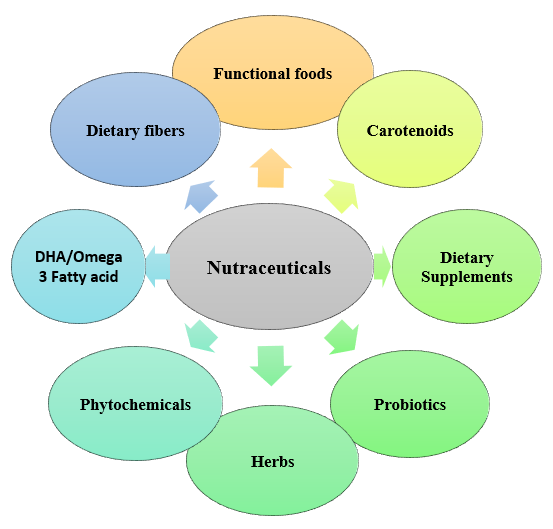
Nutraceuticals are food-derived products that provide health benefits beyond basic nutrition. The term was first introduced by Stephen DeFelice in 1989 and combines the words nutrition and pharmaceutical, reflecting the concept of products that bridge the gap between food and medicine.
Nutraceuticals are available in multiple formats, including capsules, tablets, functional beverages, and fortified foods. They typically contain bioactive ingredients such as vitamins, minerals, herbal extracts, amino acids, and other naturally derived compounds associated with health benefits. Common examples include omega-3 fatty acids, probiotics, and antioxidants.
These products are widely used to support overall health and manage specific conditions; however, consultation with a healthcare professional is recommended before use.
Nutraceutical CDMO Market Overview: Size, Growth & Key Trends
The global nutraceuticals CDMO market, valued at USD 35.10 billion in 2024, is projected to grow at a CAGR of 7.9%, reaching approximately USD 55.39 billion by 2030. (Source- Research and Markets)
Growth in the nutraceutical CDMO sector is largely driven by rising consumer awareness of preventive healthcare, an aging global population, and increasing demand for specialized formulations and complex product development.

Three macro trends are currently shaping the nutraceutical CDMO outsourcing landscape:
- Consumer demand for personalization and functional specificity. Brands are launching increasingly targeted products — cognitive health blends, women’s hormonal support stacks, performance nutrition formulas — that require sophisticated formulation chemistry. CDMOs with strong R&D benches are becoming strategic partners rather than just toll manufacturers
- Regulatory escalation across key markets. The FDA’s continued enforcement of cGMP requirements under 21 CFR Part 111, alongside tightening supplement regulations in the EU, Canada, and Southeast Asia, is driving brands toward CDMOs with deep compliance infrastructure. Brands that once self-manufactured are finding that meeting evolving regulatory expectations requires resources they simply do not have internally
- Private label growth and DTC channel proliferation. The explosion of white-label supplement brands sold through Amazon, Shopify, and direct subscription channels has created enormous demand for flexible, fast-to-market CDMO partners with low minimum order quantities, branded packaging capabilities, and fast production cycles
Latest Nutraceutical News-
-

Ennolys Expands CDMO Services Across Fermentation and Bioprocessing
-
Akums Drugs & Pharmaceuticals Secures EU GMP Certification for Two Indian Facilities
-

Codis Secures Growth Investment from 1315 Capital to Expand Haverhill Facility
-

Cotec Healthcare Files INR 295 Crore(USD 35.4 million) IPO
-

1Q Health Group Expands with Acquisition of German CRO VivaCell Biotechnology
-
Lonza Capsules & Health Ingredients Launches Center of Applied Sustainability
Nutraceutical CDMO Services: What They Are and What They Offer
A nutraceutical CDMO is a contract organization that provides the technical, regulatory, and manufacturing infrastructure required to bring a dietary supplement or functional food product from concept to consumer shelf. Unlike a standard contract manufacturer (CMO), a CDMO is distinguished by its integrated development capabilities — meaning it can take a brand owner from ingredient selection and formulation development through clinical stability testing and commercial-scale production under one roof.
The Full Service Spectrum
A full-service nutraceutical CDMO typically provides the following capabilities across the product lifecycle:
- Formulation development and R&D: Custom formula creation, ingredient compatibility assessment, bioavailability optimization, and prototype development
- Analytical and stability testing: HPLC, microbial testing, accelerated stability studies, and shelf-life validation
- Regulatory support: Label review under DSHEA, FDA structure/function claim guidance, EU Food Supplement Directive compliance, and market-specific documentation
- Clinical manufacturing: Small-batch production for pilot studies and consumer testing
- Commercial-scale manufacturing: High-volume GMP production in capsule, tablet, softgel, gummy, powder, liquid, and stick pack formats
- Packaging and private-label fulfillment: Bottling, blister packing, pouching, label printing, and kitting
- Supply chain and raw material sourcing: Approved vendor management, certificate of analysis (CoA) verification, and full ingredient traceability
Product categories served include dietary supplements (vitamins, minerals, herbals, amino acids, probiotics), sports nutrition, beauty-from-within formulas, functional foods and beverages, medical foods, and infant or pediatric nutrition — each with distinct formulation, dosage form, and regulatory considerations.
Growth Drivers
- Aging population – Rising demand for preventive health supplements
- Post-pandemic health focus – Increased consumer spending on immunity, gut health, and mental wellness products
- E-commerce expansion – Lower barriers to launching supplement brands, increasing demand for CDMO services
- Ingredient innovation – Novel botanicals, fermentation-derived actives, and microbiome-focused formulas require specialized CDMO expertise
Growth Inhibitors
- Raw material volatility – Price fluctuations for omega-3s, adaptogens, and botanicals impact margins
- Regulatory fragmentation – Differing global regulations complicate multi-region product launches
- Capacity constraints – High demand at leading CDMOs can extend production lead times
- Quality and compliance risks – cGMP violations and regulatory warnings highlight variability in CDMO standards
How to Choose the Right Nutraceutical CDMO for Your Brand
Selecting a nutraceutical CDMO is one of the most consequential decisions a brand owner will make. The wrong partner can mean missed launches, compliance failures, or product quality issues that damage consumer trust and invite regulatory scrutiny. The right partner becomes a competitive advantage — one that brings formulation intelligence, operational reliability, and regulatory fluency to every product you bring to market.
Dosage Form Expertise
Not every nutraceutical CDMO specializes in every format. Confirm that your shortlisted CDMO has validated, production-scale experience with the specific dosage form your product requires — whether that is two-piece hard-shell capsules, compressed tablets, enteric-coated softgels, pectin-based gummies, spray-dried powders, stick packs, or ready-to-drink liquids. Ask to see batch records or reference product examples, not just equipment lists. Softgel CDMO manufacturing, in particular, requires proprietary encapsulation technology and fill formulation chemistry that not all facilities have mastered.
GMP Certification and Regulatory Standing
Any nutraceutical CDMO serving the US market must operate under FDA current Good Manufacturing Practice (cGMP) regulations as defined under 21 CFR Part 111, the federal standard established by DSHEA. Beyond the regulatory baseline, leading facilities carry third-party certifications such as NSF/ANSI 455 (dietary supplement GMP), NSF Certified for Sport, USP verification, Informed Sport, or ISO 22000 for functional food manufacturing. Request copies of the facility’s most recent GMP audit or third-party inspection report — not just the certificate. A CDMO’s regulatory standing is one of the most reliable proxies for operational quality.
Formulation Development Capability
A true nutraceutical formulation CDMO employs in-house food scientists, formulators, and analytical chemists who can work from your brief to develop a proprietary formula, assess ingredient interactions, confirm bioavailability, and run accelerated stability studies. If a CDMO cannot demonstrate real R&D infrastructure — their own lab, documented formulation processes, and a track record of novel product development — they are a toll manufacturer, not a development partner. For complex formulas (liposomal delivery systems, time-release capsules, multi-phase gummies), this distinction matters enormously.
Raw Material Sourcing and Supplier Qualification
The quality of a finished supplement is inseparable from the quality of its ingredients. Evaluate whether your CDMO maintains an approved vendor list with rigorous incoming quality control — including identity testing, microbial and heavy metal analysis, and CoA verification against specifications for every raw material lot. Traceability from raw material to finished product is increasingly a minimum expectation for sophisticated buyers and is essential for any brand selling into the EU or markets with chain-of-custody requirements.
Label Compliance Expertise
DSHEA-compliant labeling for the US market involves precise formatting requirements for supplement facts panels, serving size declarations, structure/function claims, and disclaimer language. Internationally, requirements vary substantially — the EU Food Supplement Directive, Health Canada’s NHP regulations, and TGA rules in Australia each have distinct requirements. A qualified CDMO partner should have in-house or retained regulatory affairs professionals who can review your label for market-specific compliance, not simply format it attractively.
Clean-Label, Vegan, Allergen-Free, and Sustainability Credentials
Consumer demand for clean-label nutraceutical products — free from artificial fillers, allergens, animal-derived excipients, and synthetic flow agents — has elevated formulation requirements significantly. Verify whether your CDMO can certify products as vegan, kosher, halal, non-GMO, gluten-free, or organic-compliant. Ask about their approach to allergen segregation and cross-contamination control. For brands with sustainability commitments, inquire about the CDMO’s use of recyclable or post-consumer recycled packaging materials and their waste reduction practices.
Minimum Order Quantities and Scale Flexibility
For early-stage brands, minimum order quantities (MOQs) are a critical commercial variable. Some CDMOs require minimum runs of 10,000–50,000 units per SKU, which can be prohibitive at launch. Others serve the startup segment with MOQs as low as 1,000–5,000 units, particularly for capsule and powder formats. Equally important for scaling brands is confirmation that your CDMO has the capacity to grow with you — that a facility capable of your initial 5,000-unit pilot can also execute a 500,000-unit commercial run without compromising lead time or quality control.
Packaging, Labeling, and Private-Label Fulfillment
For private label nutraceutical CDMO partnerships, the scope of services extends beyond manufacturing. Assess whether the CDMO offers end-to-end fulfillment: container sourcing, label printing and application, induction sealing, lot coding, kitting for subscription boxes, and direct-to-consumer fulfillment integrations. Brands selling through Amazon FBA or subscription platforms increasingly need CDMO partners who can ship finished, retail-ready product directly from the manufacturing facility — reducing handling costs and compressing time to consumer.
Five Red Flags When Evaluating a Nutraceutical CDMO
- The facility cannot produce a current, third-party GMP audit report or FDA inspection record on request
- The CDMO cannot demonstrate prior formulation development experience in your specific product category or dosage form
- Pricing appears unusually low, which often signals inferior raw material sourcing, inadequate testing protocols, or unqualified manufacturing environments
- Communication is slow, evasive, or reliant on vague claims rather than documented processes — a signal of operational disorganization that will multiply during production
- The facility does not maintain in-house analytical testing capability and relies entirely on third-party labs for finished product release — increasing both turnaround risk and quality control gaps
Five Questions to Ask Shortlisted CDMOs Before Signing
- Can you provide documentation of your most recent FDA inspection outcome and any third-party GMP audit conducted in the last 18 months?
- What is your standard process for raw material qualification, and can you provide an example supplier qualification package?
- What are your lead times from formula finalization to finished goods delivery for our target dosage form and volume?
- Do you carry liability insurance for product recalls, and what is your documented procedure if a batch fails finished product release testing?
- What percentage of your current production capacity is available for new clients, and how do you prioritize production scheduling during high-demand periods?
Strategic Outlook for Nutraceutical CDMO Partnerships
The nutraceutical CDMO sector is maturing rapidly. Where brand owners once evaluated contract partners primarily on price and production capacity, sophisticated buyers today assess regulatory standing, formulation IP capabilities, supply chain transparency, and long-term partnership infrastructure. As the global market moves toward USD 55.39 billion by 2030, the CDMOs that will capture the most value are those investing in analytical capabilities, clean-label formulation platforms, and flexible manufacturing lines capable of serving both emerging DTC brands and large-scale commercial programs.
For brand owners, the strategic imperative is clear: evaluate potential nutraceutical CDMO partners with the same rigor you would apply to any major supplier relationship. Request documentation, verify certifications, ask hard operational questions, and prioritize partners whose compliance culture and development capabilities align with where your brand needs to go — not just where it is today.
Frequently Asked Questions About Nutraceutical CDMO
What is a nutraceutical CDMO?
A nutraceutical CDMO is a Contract Development and Manufacturing Organization that provides integrated formulation development, regulatory support, and GMP-certified commercial production services for dietary supplements, functional foods, and consumer health products. CDMOs are distinguished from basic contract manufacturers by their upstream development capabilities — enabling brand owners to bring a product from concept to market through a single, specialized partner.
What services do nutraceutical CDMOs provide?
Nutraceutical CDMOs provide a comprehensive range of services including custom formulation development, analytical and stability testing, regulatory affairs support, clinical and commercial-scale manufacturing, private-label packaging, and supply chain management. Full-service partners manage the complete product lifecycle from ingredient sourcing and prototype development through finished goods release and fulfillment.
What GMP certifications should a nutraceutical CDMO have?
For US-market production, a nutraceutical CDMO must operate under FDA cGMP regulations as codified in 21 CFR Part 111 under DSHEA. Leading facilities additionally hold NSF/ANSI 455 certification, NSF Certified for Sport approval, USP verification, Informed Sport certification, or ISO 22000 food safety management accreditation. Buyers should verify certifications against the issuing body’s registry rather than relying on self-reported claims.
How do I choose the right CDMO for my nutraceutical brand?
Evaluate potential nutraceutical CDMO partners across eight core criteria: dosage form expertise, GMP certification and regulatory standing, formulation development infrastructure, raw material sourcing and supplier qualification processes, label compliance capability, clean-label and specialty diet credentials, minimum order quantity flexibility, and packaging or private-label fulfillment services. Request documentation for all claims and conduct a facility audit or virtual site visit before committing to a long-term manufacturing agreement.
What dosage forms can nutraceutical CDMOs manufacture?
Leading nutraceutical CDMOs manufacture across a broad range of dosage forms including hard-shell capsules (gelatin and vegetarian), compressed tablets, softgels, gummies (gelatin and pectin-based), bulk and single-serve powders, stick packs, effervescent tablets, chewables, liquids, and ready-to-drink formulations. Dosage form capabilities vary by facility — confirming that your target format is a validated, commercially established offering at any candidate CDMO is an essential due diligence step.